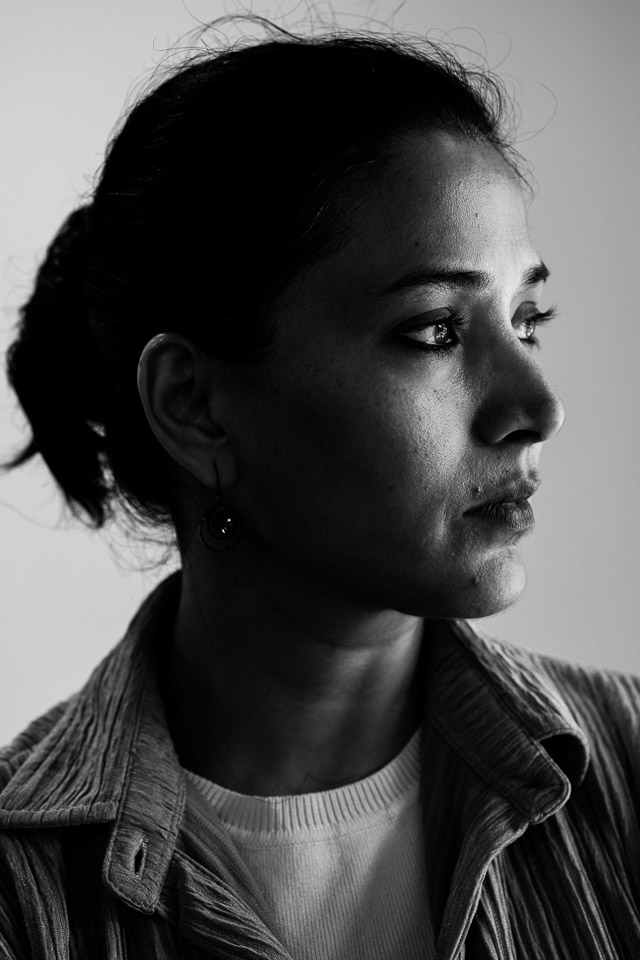
Every artist’s journey looks obvious in hindsight.
It never feels that way while it is unfolding.
I first met Rubkirat almost ten years ago. We acknowledged each other and moved on. Our paths crossed occasionally after that, though it is only over the past three years that we have worked closely together. Those years have been filled with studio visits, long conversations and the gradual trust that develops over time.
Studios reveal things exhibitions never can.
An exhibition presents a conclusion.
A studio is full of questions.
That is where I have always preferred meeting artists.
I still remember my first visit to Rubkirat’s studio.
There was work everywhere. Some paintings carried confidence. Others were still searching. The direction felt uncertain, although the commitment never did. She was putting in the work. The destination simply hadn’t revealed itself yet.
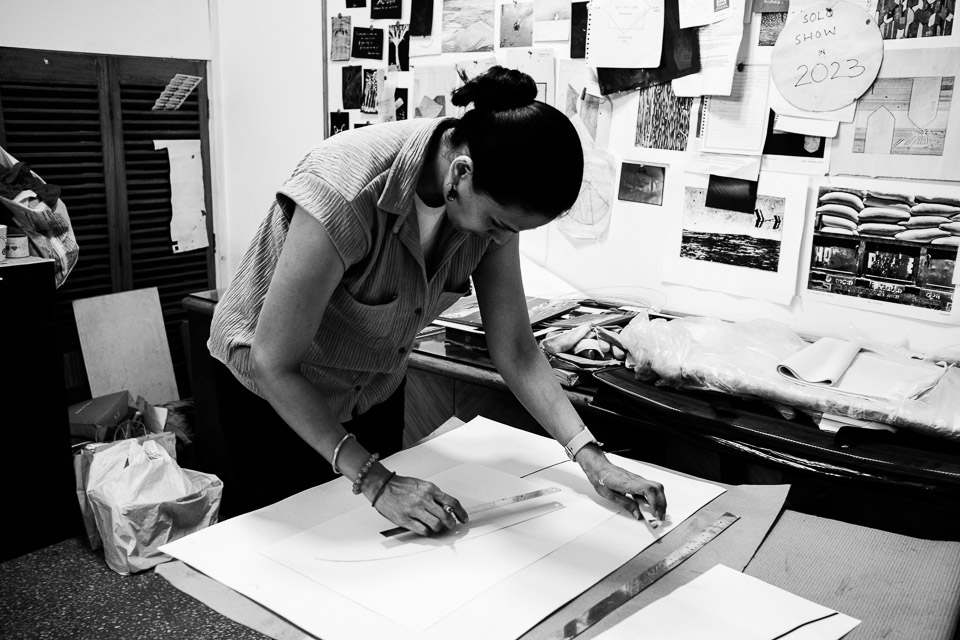
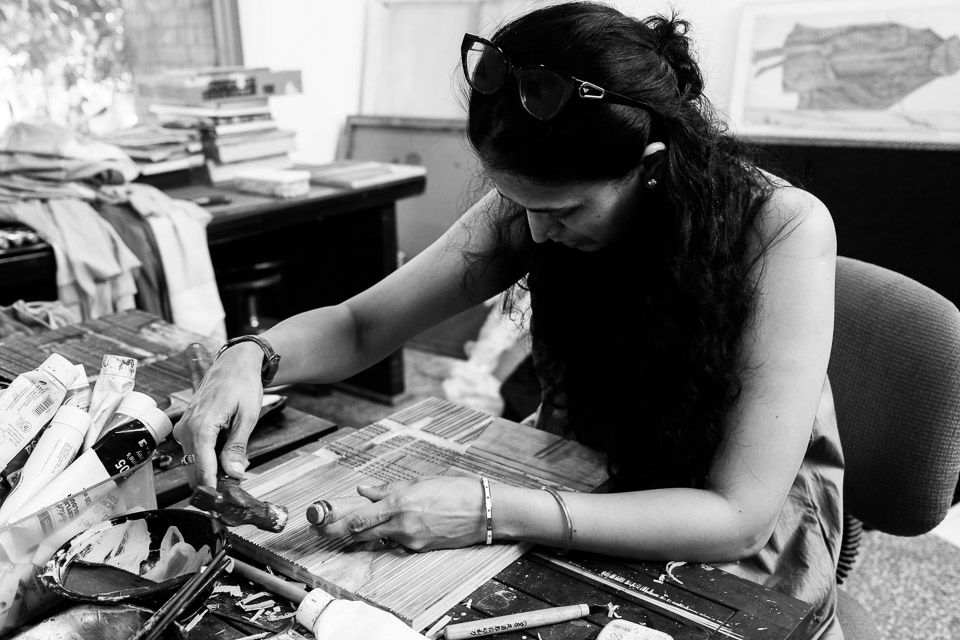
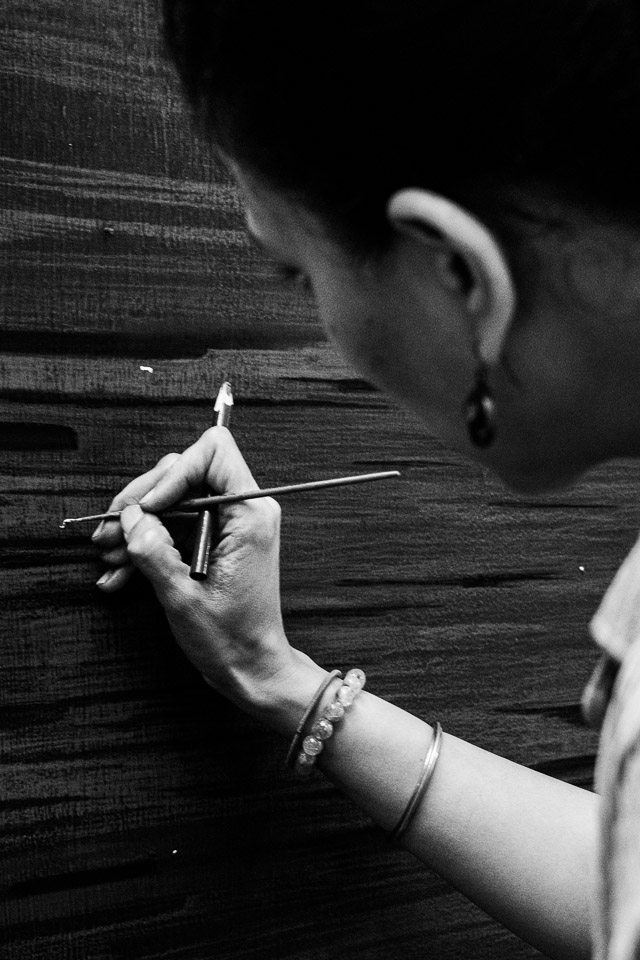
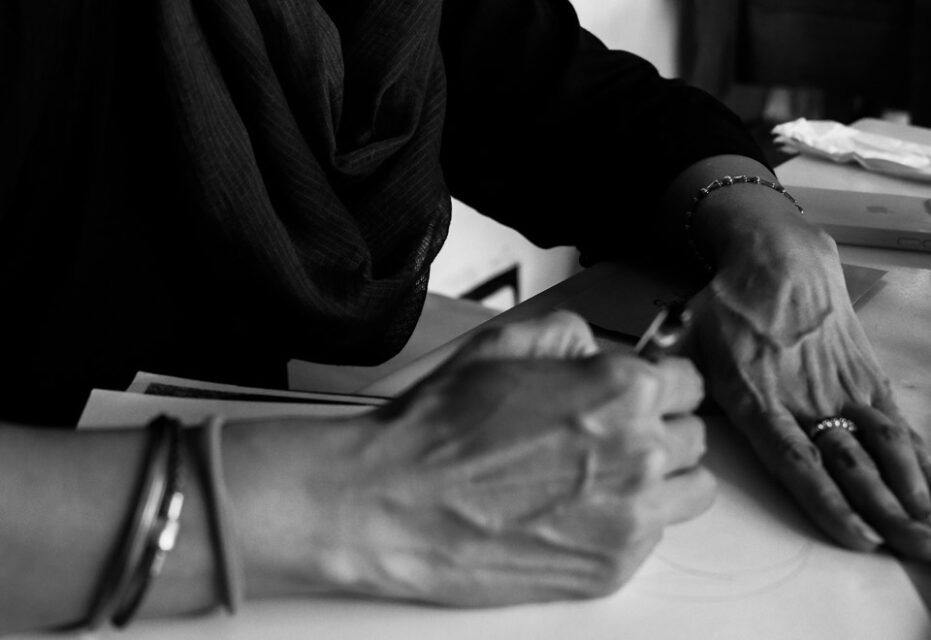
While we spoke, I found myself looking at her hands.
Photography has taught me to observe before reaching for the camera. People reveal themselves in quiet ways. A pause. A glance. The way they move through a room. The way they hold a brush.
Hands reveal even more.
Rubkirat’s hands immediately caught my attention. These were the hands of someone who had spent years making things.
I noticed that before I understood the paintings.
I also sensed something else.
Any suggestion I made would need time. She would listen, think, disappear into the studio and return months later with something that had become entirely her own.
Nothing ever felt borrowed.
Looking back, trust developed in much the same way.
Quietly.
Studio visit after studio visit.
Conversation after conversation.
One afternoon I looked around the studio and jokingly said, “You’re at the bottom of the pool. There is nowhere left to go except up.”
She didn’t appreciate it.
I laughed.
She didn’t.
That moment has stayed with me because it revealed something I understand much better today.
Rubkirat responds to challenge.
Present a difficult problem.
Ask an uncomfortable question.
She runs with it.
Very few artists willingly dismantle their own certainty.
She does.
Every time the work begins to settle, another question appears. She follows it. Watching that unfold has been one of the great pleasures of working with her.
Over time I began hearing stories about her childhood. Each one explained something I had already observed in the studio.
Her grandfather worked with wood.
She remembers the smell of freshly chiselled timber.
Wood shavings covering the floor.
Tools arranged with great care.
She desperately wanted to use them.
He never allowed her.
Today she smiles while telling that story.
Respect for material arrived long before she became an artist.
Her aunt made dolls by hand.
Her grandmother practised kalai, restoring old metal utensils until they shone again.
As a child she watched ordinary objects become something else.
Transformation fascinated her.
Looking at her paintings today, those memories seem quietly present.
Wood carries its own history.
So does metal.
So does paper.
She adds another chapter.
Architecture entered her life just as naturally.
Her father built models of heritage buildings. Together they searched archives, studied old drawings and spent time looking closely at monuments.
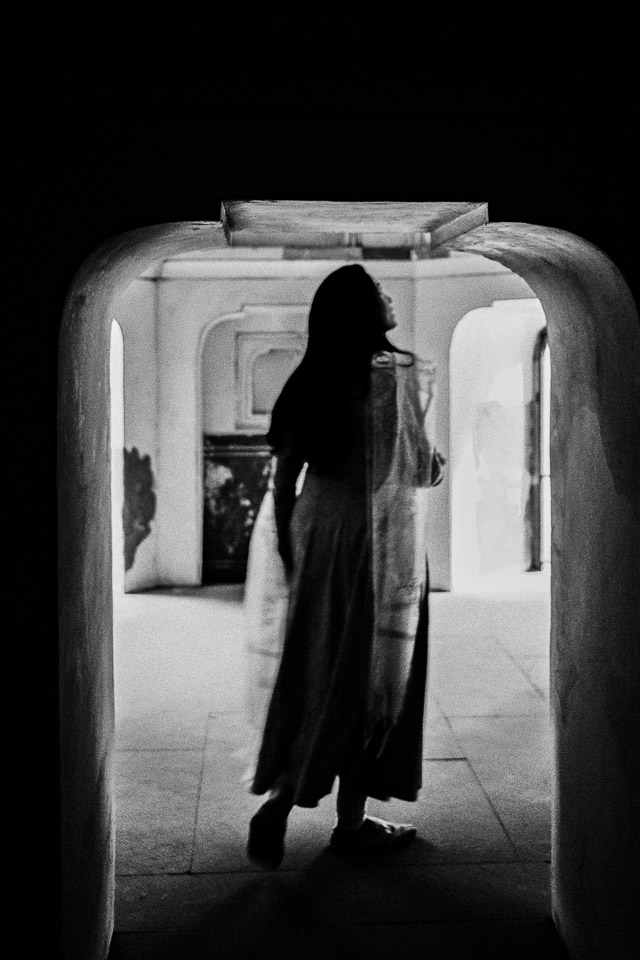
I have photographed Rubkirat inside those monuments. She never rushes through them. She slows down. She studies proportions. She notices details many people simply walk past. Standing beside her, it becomes clear that these spaces are familiar to her. The Mehrab didn’t suddenly appear in her work. It had been finding its way there for years.
Faith occupies a similarly quiet place.
She remembers walking to the gurdwara before sunrise with her grandmother.
She remembers the silence.
The light.
The feeling of those mornings.
Sometimes, while working, a tuk from the Gurbani enters her thoughts.
She calls it a small sign.
Enough to continue.
There is another story that has always stayed with me.
Long before she knew much about the art world, she heard about a well-known artist.
Curiosity took her to his house.
She walked in and introduced herself.
Most people would have hesitated.
She didn’t.
Curiosity has always moved a little faster than caution.
It still does.
Joy, for Rubkirat, arrives quietly.
She speaks about finally finding a way to express something she has been carrying inside herself.
After spending the past three years in her studio, I rarely think about Rubkirat’s paintings without thinking about the person who makes them.
The child fascinated by wood shavings.
The young woman curious enough to walk into a stranger’s house.
The artist who allows an idea to grow at its own pace.
The person who accepts a difficult challenge, disappears into the studio and returns with an answer no one expected.
As someone who spends time in artists’ studios, I have learnt that progress and growth are very different things.
Progress follows a path.
Growth changes it.
Rubkirat continues to change her own path.
That is what keeps drawing me back to her studio.
The paintings will continue to evolve.
They always will.
What gives me confidence is something much simpler.
Somewhere inside Rubkirat, the curious little girl who watched wood being carved, who stood mesmerised as old metal found a new life, who walked uninvited into a stranger’s house simply because she wanted to know more…
…is still there.
I hope she always is.