I have always believed that an artist needs solitude.
For me, solitude is as important as breathing.
I don’t mean being alone all the time. I have seen enough artists to know that everybody works and copes differently.
I know an artist who could not be alone in the evenings. She wanted people around her. She wanted to go out, meet people and do things that had nothing to do with art.
I never saw that as a lack of seriousness about her work.
I saw it as a way of compartmentalising her life.
There was a time for art and a time for everything else.
That separation seemed to create a balance for her.
I know another artist who works almost entirely in solitude. Classical music plays while he works. He can spend long periods alone with his work and seems to need that concentration.
Then he will spend days surrounded by people, doing things that have nothing to do with art.
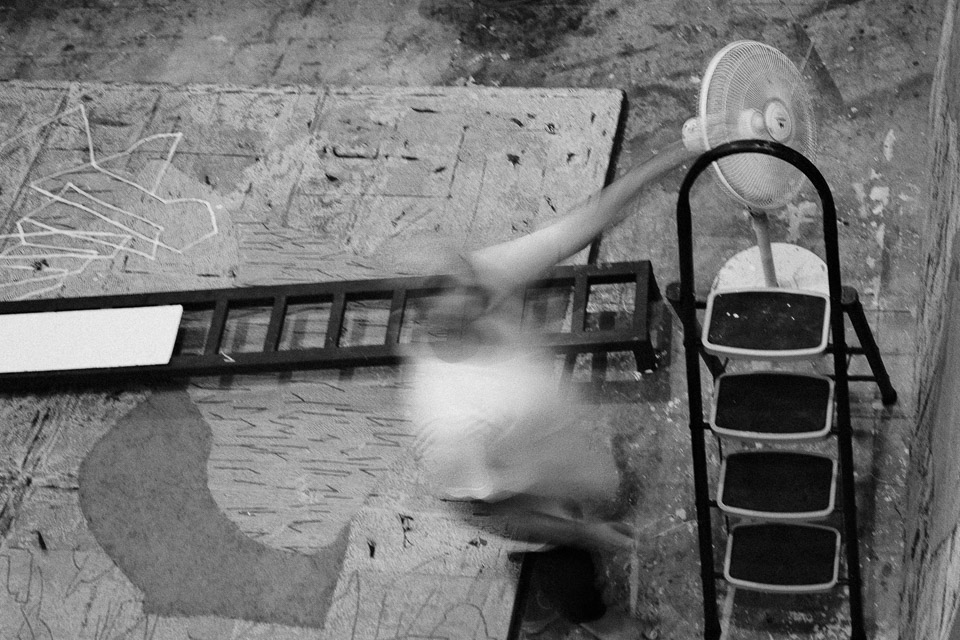
Both artists are very different.
Both have found their own way of creating space for themselves.
Perhaps that is what matters.
An artist needs to find the rhythm that allows them to work and still live.
I have rarely seen an artist sustain a serious practice without some degree of solitude.
There has to be a period when the artist is alone with the work.
No conversation.
No opinions.
No expectations.
Just the work and the artist.
That is where decisions are made.
Ideas are tested.
Problems are solved.
Sometimes the work changes completely.
Sometimes the artist changes their mind.
Sometimes nothing works and they start again.
All of that requires a certain amount of silence.
This is one reason I believe an artist needs a studio that is separate from their living space.
The physical separation matters.
You enter the studio and you know why you are there.
It creates discipline.
The studio becomes a place where work happens.
I have seen artists who have that separation develop more consistently over time. Their practice evolves because they have created a regular relationship with their work.
They return to it.
They spend time with it.
They allow ideas to develop.
That continuity matters.
An artist’s practice does not usually evolve through occasional bursts of inspiration. It evolves through returning.
And returning requires a place to return to.
For me, solitude serves another purpose.
It allows me to resolve things.
I think better when I am alone.
I conceptualise.
I problem solve.
I make decisions.
I move ahead.
Things that seem complicated when I am surrounded by people often become much clearer when I have some time by myself.
I don’t necessarily need answers immediately.
Sometimes I simply need the space to let a thought settle.
That is what solitude gives me.
Space.
We all have to come back from that space eventually.
There are people around us.
There are expectations.
There are opinions.
There are responsibilities.
There is the constant noise of other people’s lives.
An artist cannot live permanently outside all of that.
The real challenge is learning how to return to it without allowing it to take over.
I think this is particularly difficult for artists because many artists are sensitive people.
They notice things.
They absorb things.
A comment that someone else forgets five minutes later can stay with an artist for days.
A rejection can become a question about the work.
An opinion can become self doubt.
Someone else’s expectation can quietly become your own.
Learning not to absorb everything is a task in itself.
You have to develop a shield.
Or perhaps a thick skin.
Not so thick that you stop feeling, because sensitivity is also part of what allows an artist to see.
But thick enough to decide what gets in.
That balance is difficult.
You need to be open enough to observe the world and protected enough not to be overwhelmed by it.
Perhaps that is what solitude provides.
It gives you a place to return to yourself.
Away from other people’s expectations.
Away from the constant need to respond.
Away from the pressure to have an opinion or explain what you are doing.
You can simply work.
And then you can step out again.
Meet people.
Talk.
Listen.
Live.
Do things that have nothing to do with art.
I think both parts are necessary.
An artist cannot live entirely inside the studio.
But the practice needs a place to return to.
That return is where the work grows.
It is also where the artist grows.
Maybe solitude is not really about being alone.
It is about having a space where you can hear yourself think.
For me, that space is essential.
It is where I resolve things.
It is where I work things out.
It is where I understand what I need to do next.
And then I go back into the world.
Perhaps that is the balance.
To know when to step away, and when to return.