What remains
I went to Fatehpur Sikri wanting to spend time with the place. I wanted to look at the red sandstone, the courtyards, the passages, the worn steps and the traces of the people who had lived here centuries ago. I imagined the quiet that a place like this might hold.
What I encountered was very different.
The experience was exhausting. Vendors followed us through the complex. There was confusion at almost every turn, poor management, practices that left me deeply uncomfortable and a general sense that a place of such importance had been left to fend for itself. What disturbed me most was not simply the neglect of the buildings, but the casualness with which the neglect seemed to be accepted.
And yet, somewhere inside all that noise, the place kept appearing.
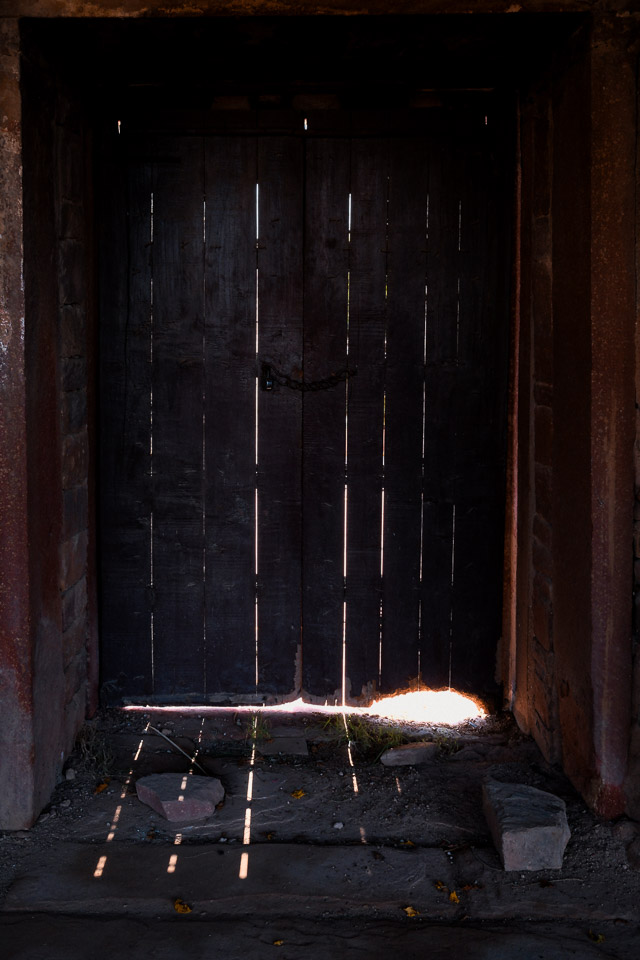
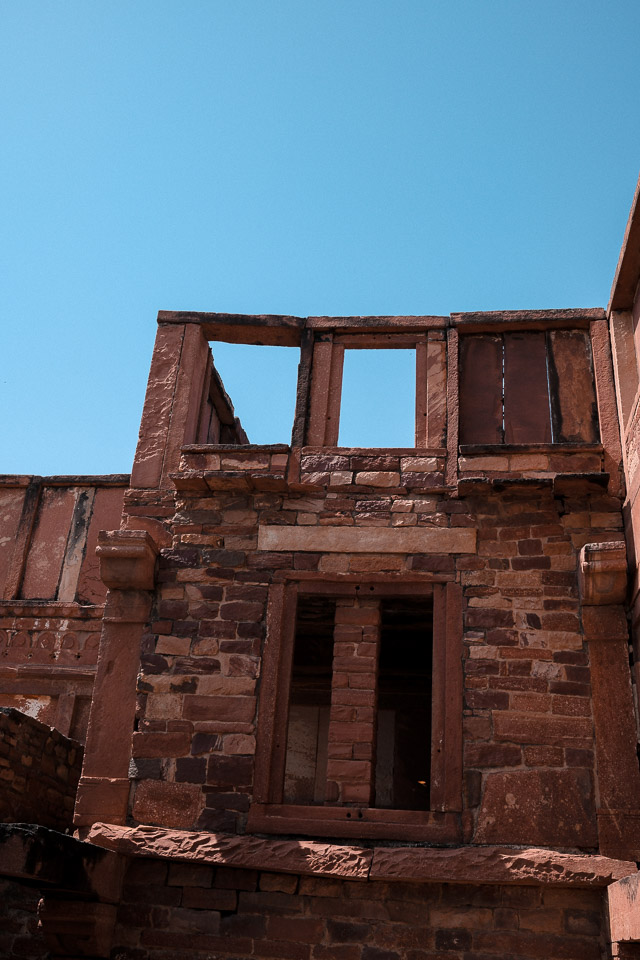
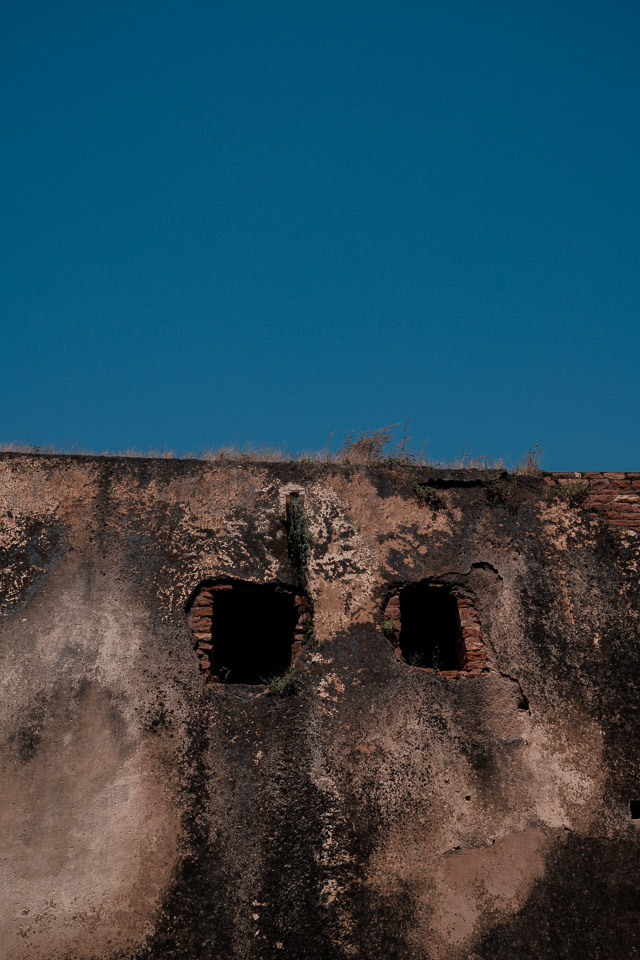
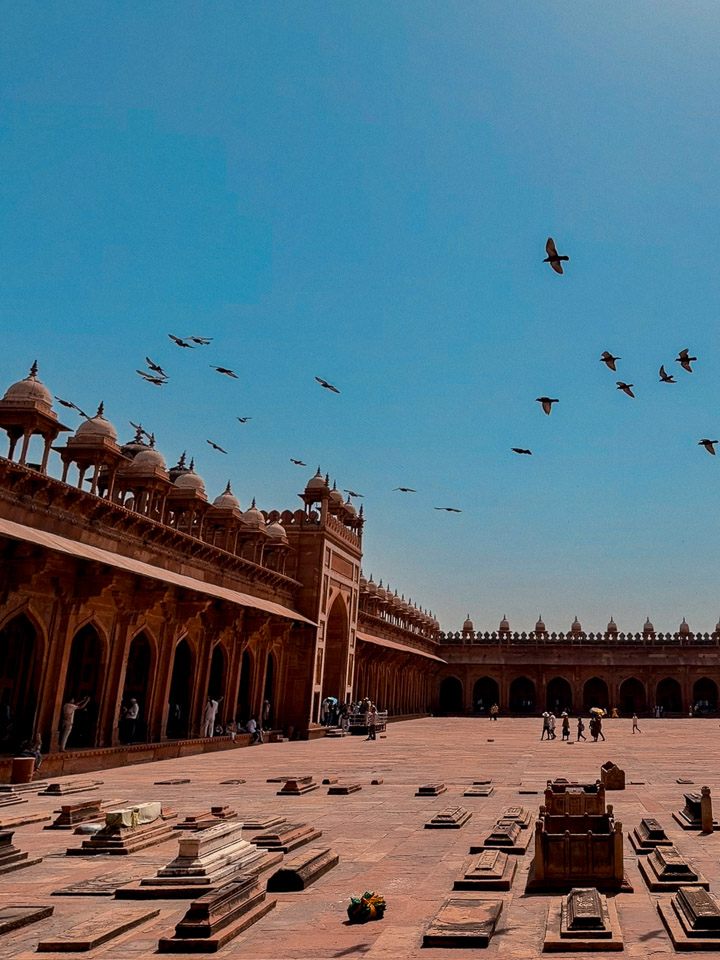
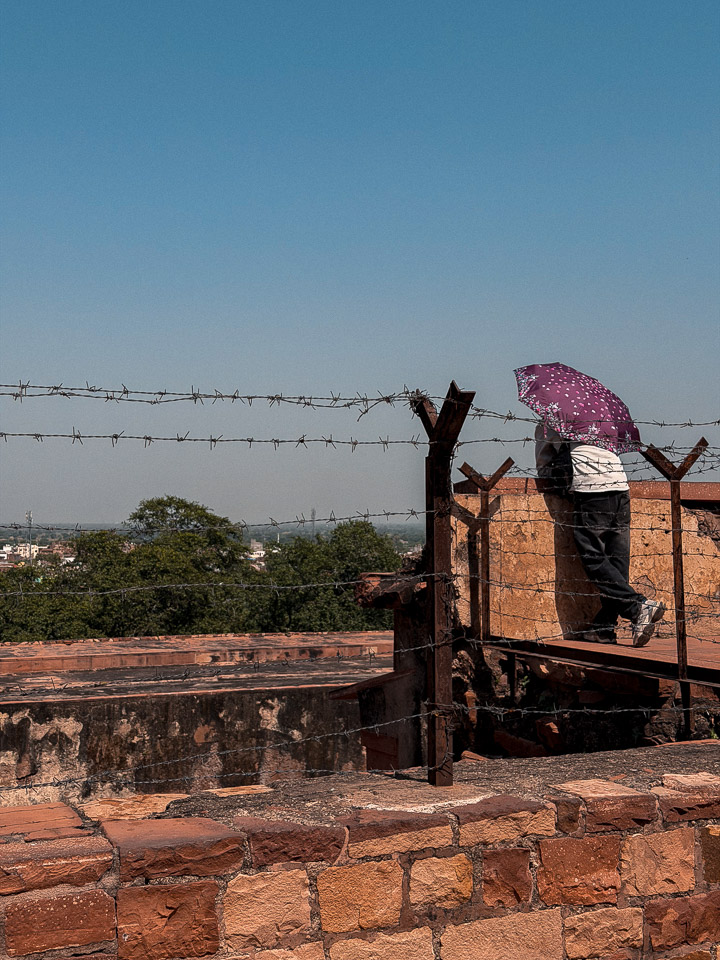
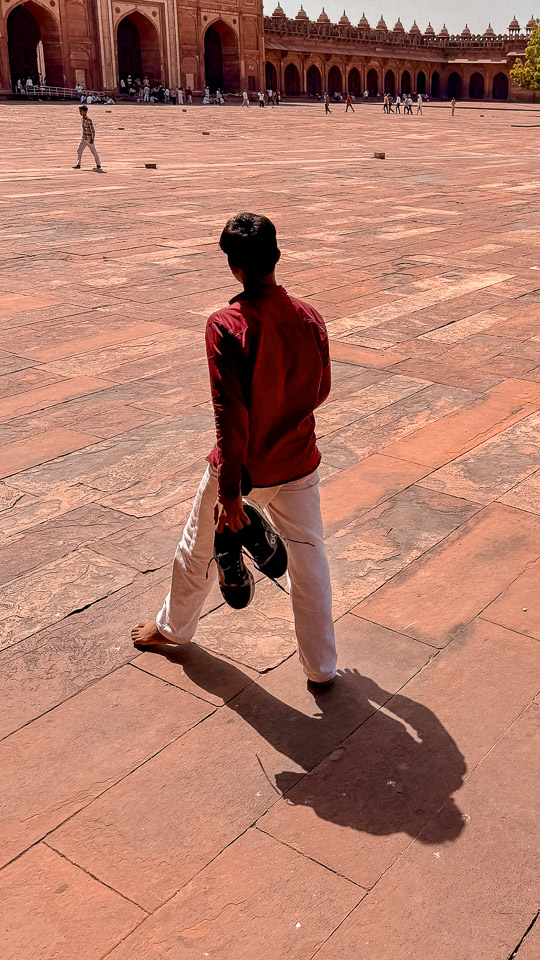
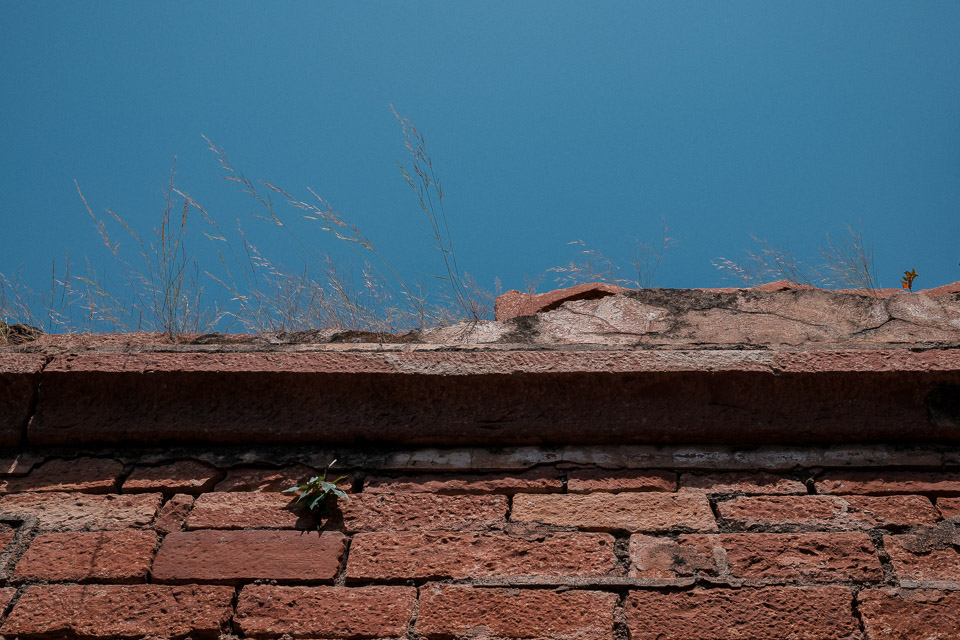
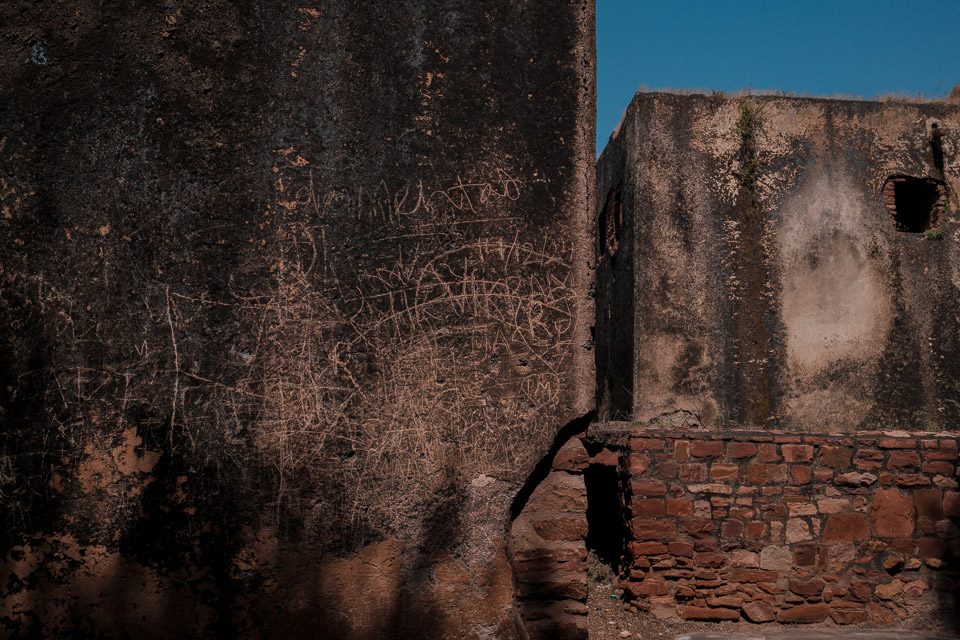
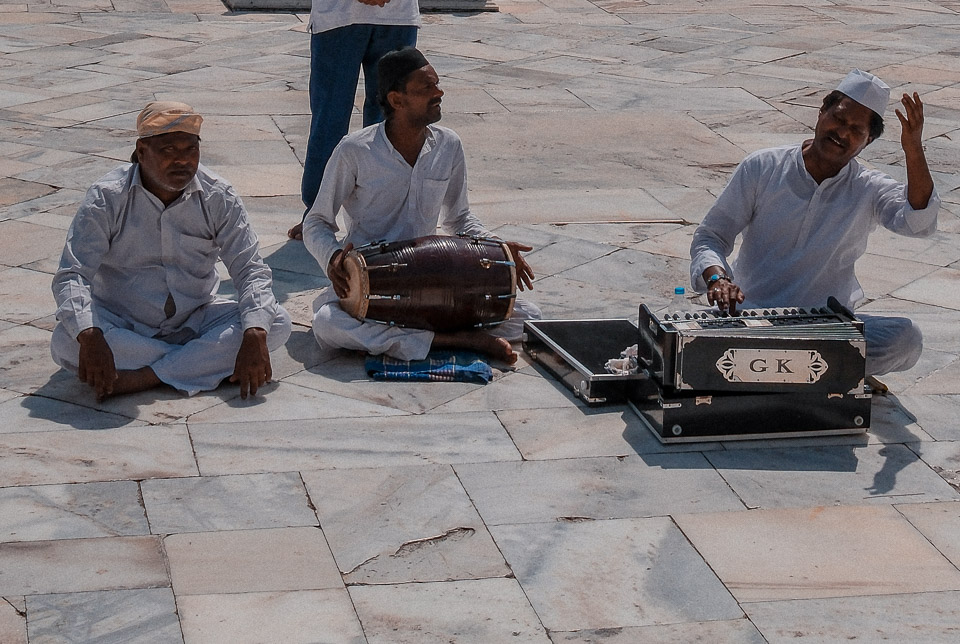
A wall caught the afternoon sun. A doorway stood closed, with thin lines of light finding their way through the wood. Grass grew from the top of a weathered wall. A tree rose quietly behind the stone. Birds crossed the enormous blue sky. Musicians sat on the courtyard floor, playing as people moved around them. Someone walked barefoot across the red stone, carrying his shoes in his hand.
These were the moments I photographed.
I began to stop looking for the monument as an object and started looking at what was still alive within it. The worn surfaces, the shadows, the people, the music, the birds, the plants growing through cracks. The photographs became less about documenting Fatehpur Sikri and more about trying to find its presence.
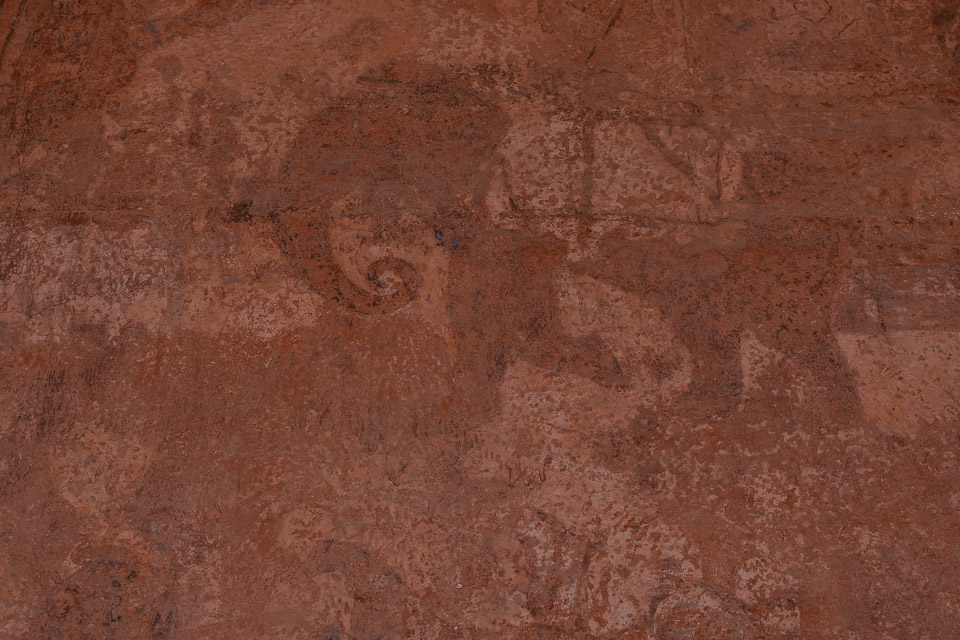
There is something deeply moving about old architecture when it begins to lose its certainty. Walls crack. Doors close. Paint disappears. Names are scratched into surfaces. Stone wears down under thousands of footsteps. Nature slowly enters where people have left.
Fatehpur Sikri seemed to be holding all of this at once.
It was difficult to photograph because the place itself was difficult to experience. I had to work through the distraction, the noise and my own disappointment. Perhaps that is why these photographs became quieter as I made them.
They are fragments of a visit that did not unfold as I had imagined.
I came looking for history.
I left thinking about what we do with history once we inherit it.