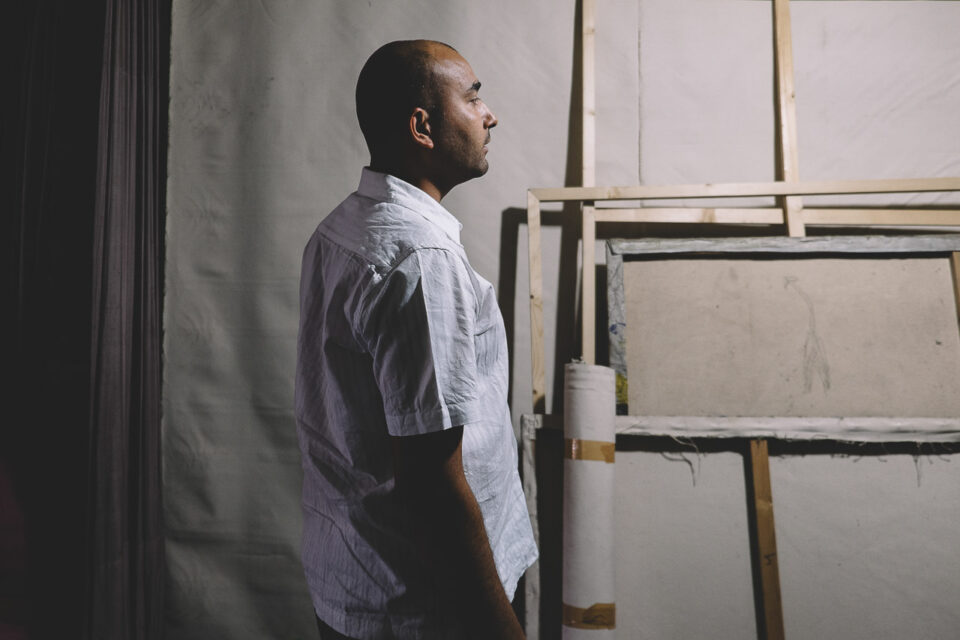
In the peak of the Delhi summer in 2017, I got the opportunity to photograph artist Abhijit Pathak’s studio. It was tucked away in Chilla Gaon, one of Delhi’s old Lal Dora villages.
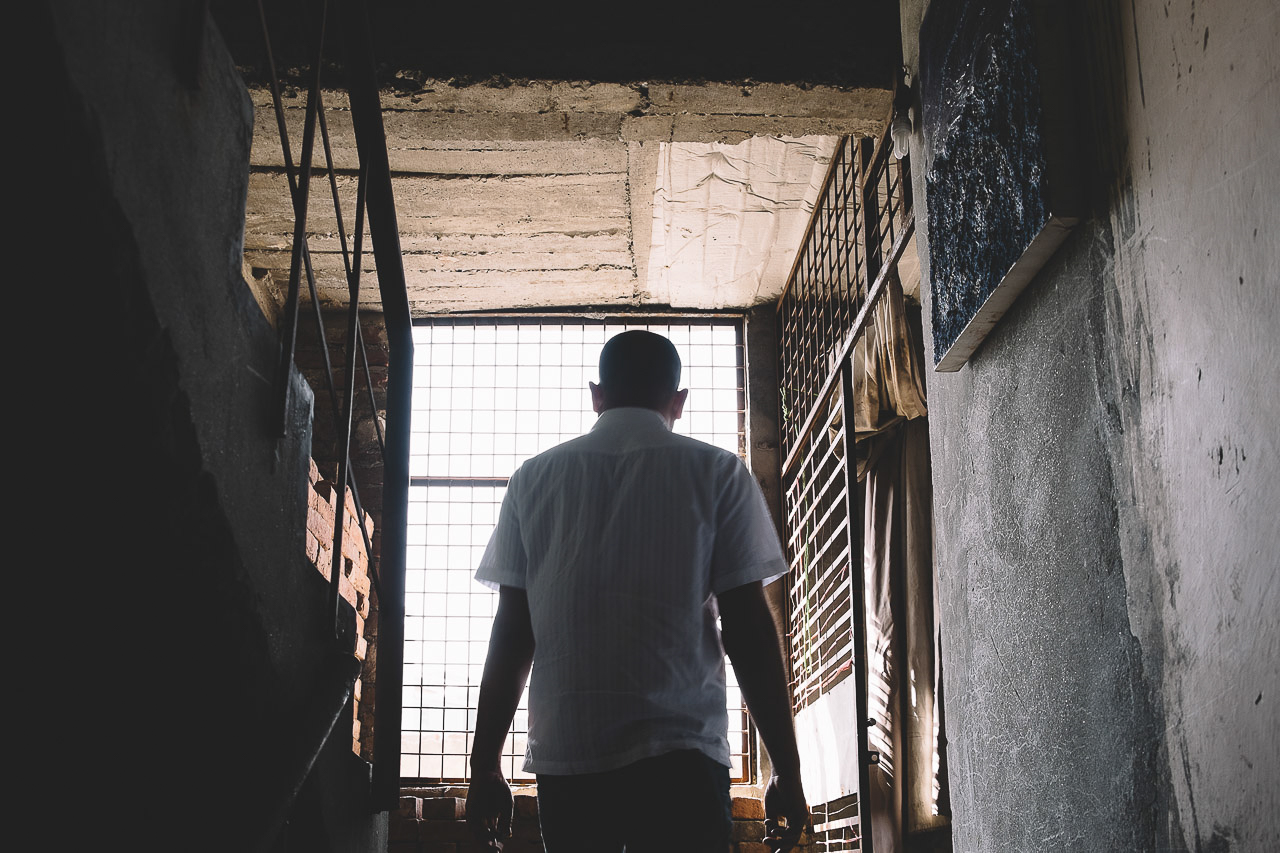
I still remember climbing four narrow flights of stairs. By the time I reached the top, I was completely out of breath. The heat had settled into the building. Before I entered, Abhijit smiled and said, “Don’t be overwhelmed by the chaos.”
I was.
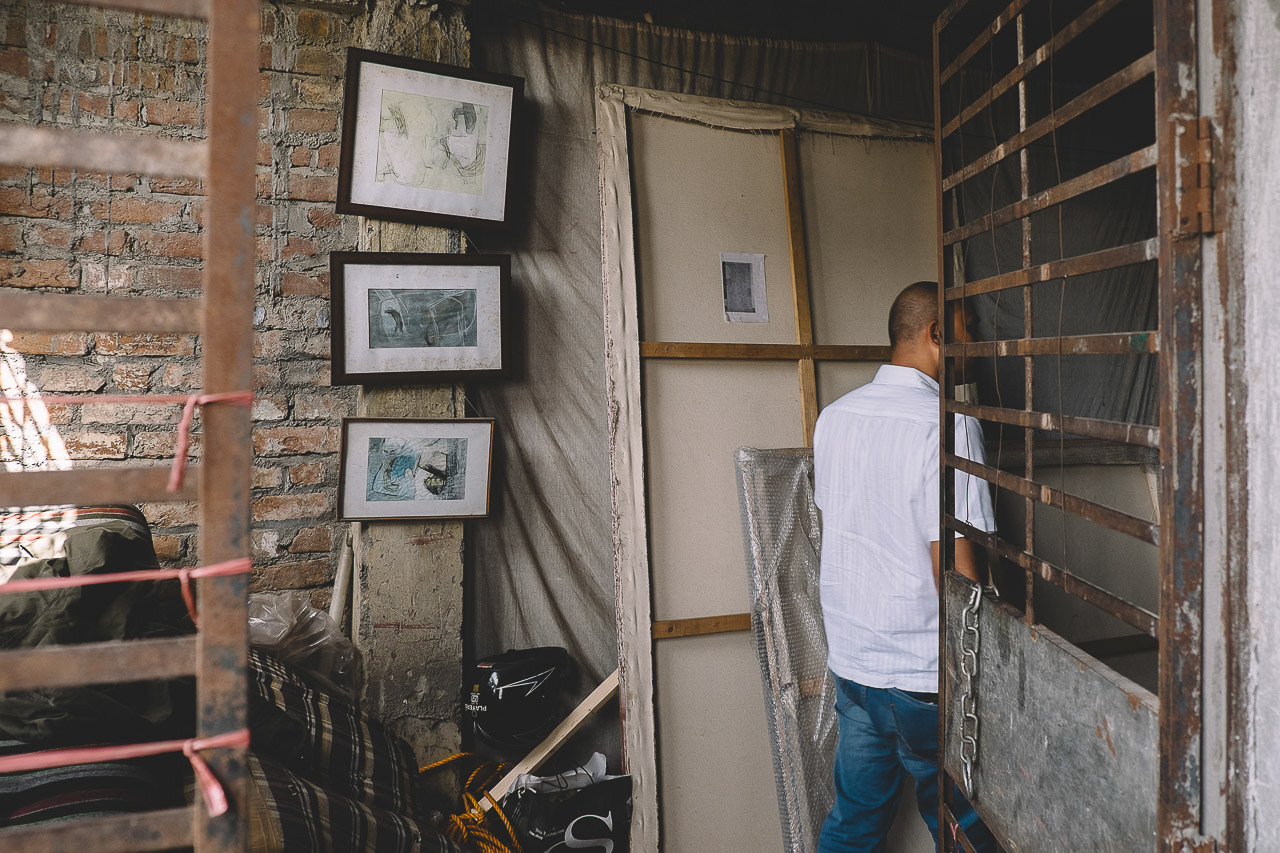
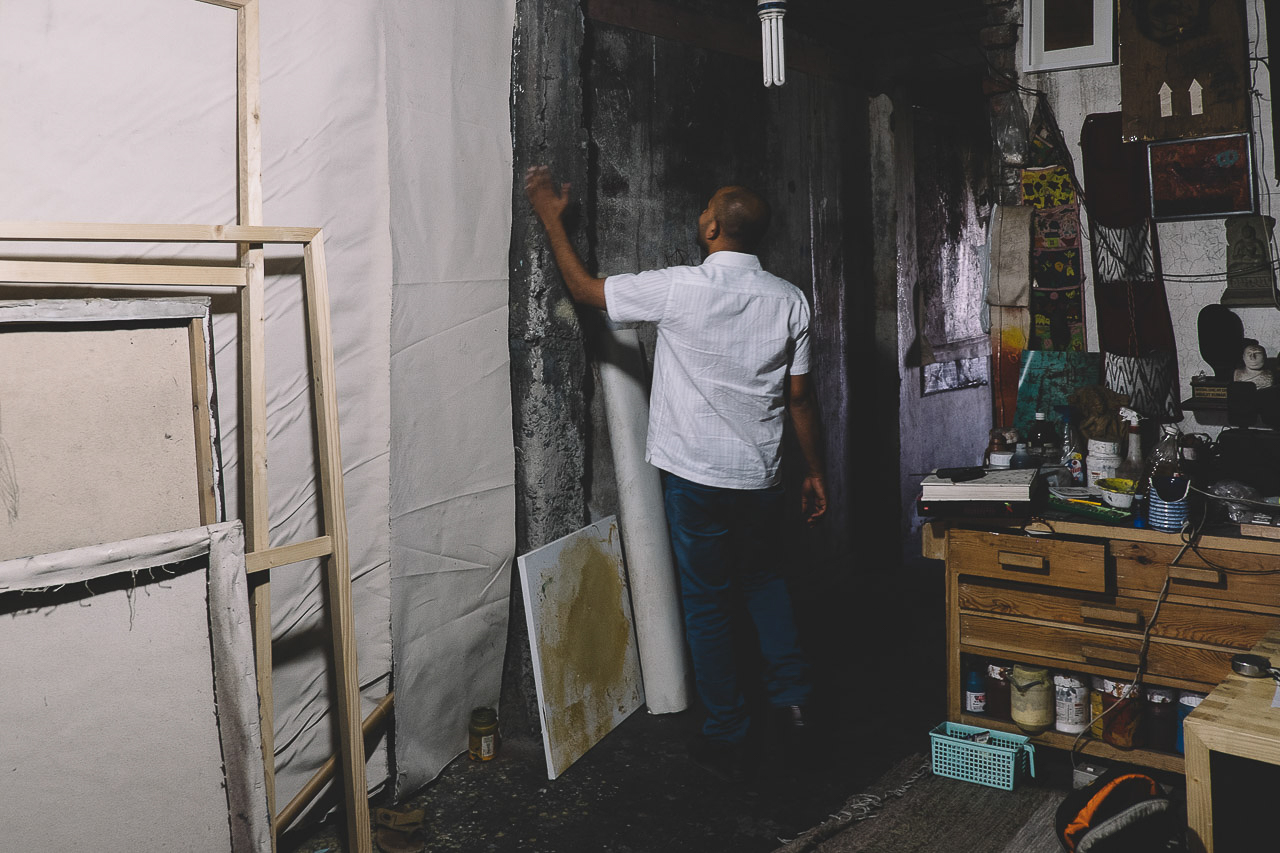
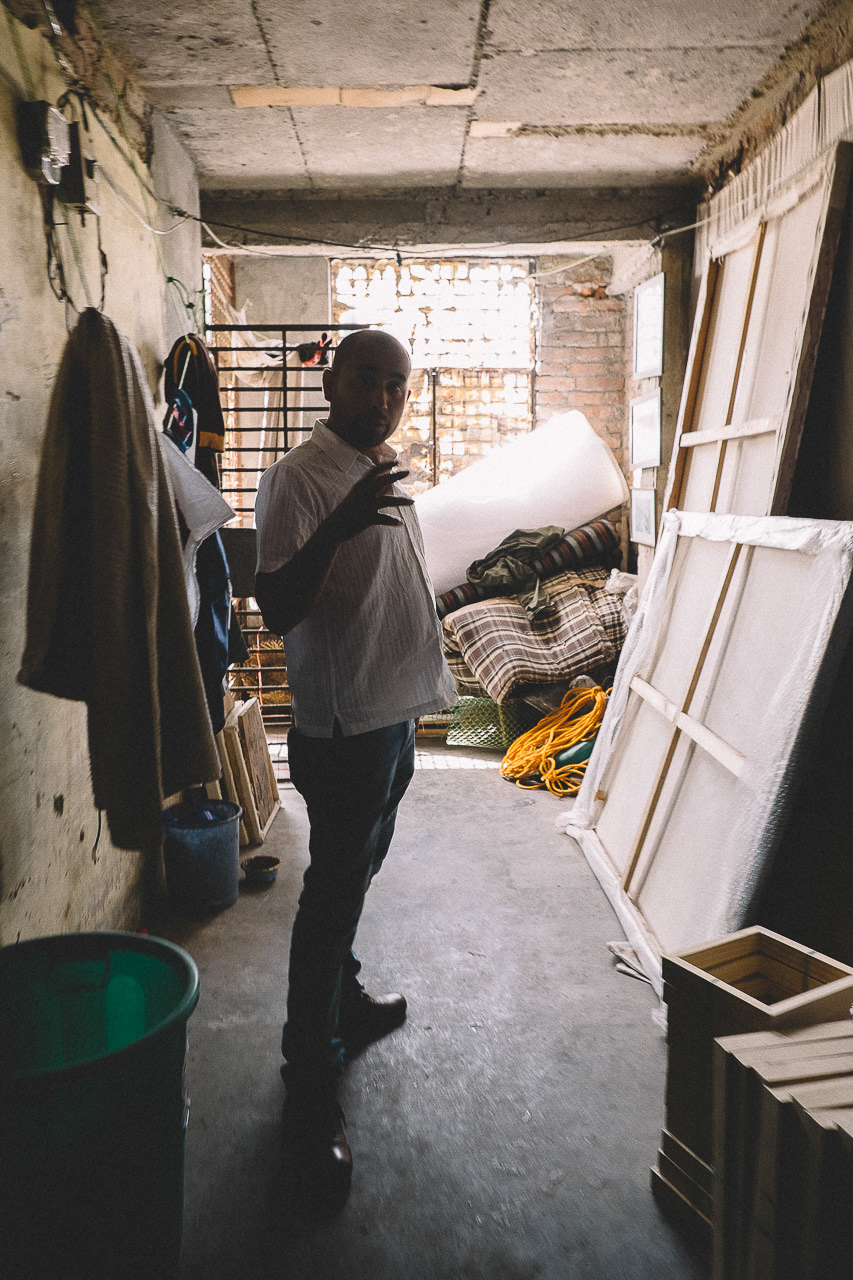
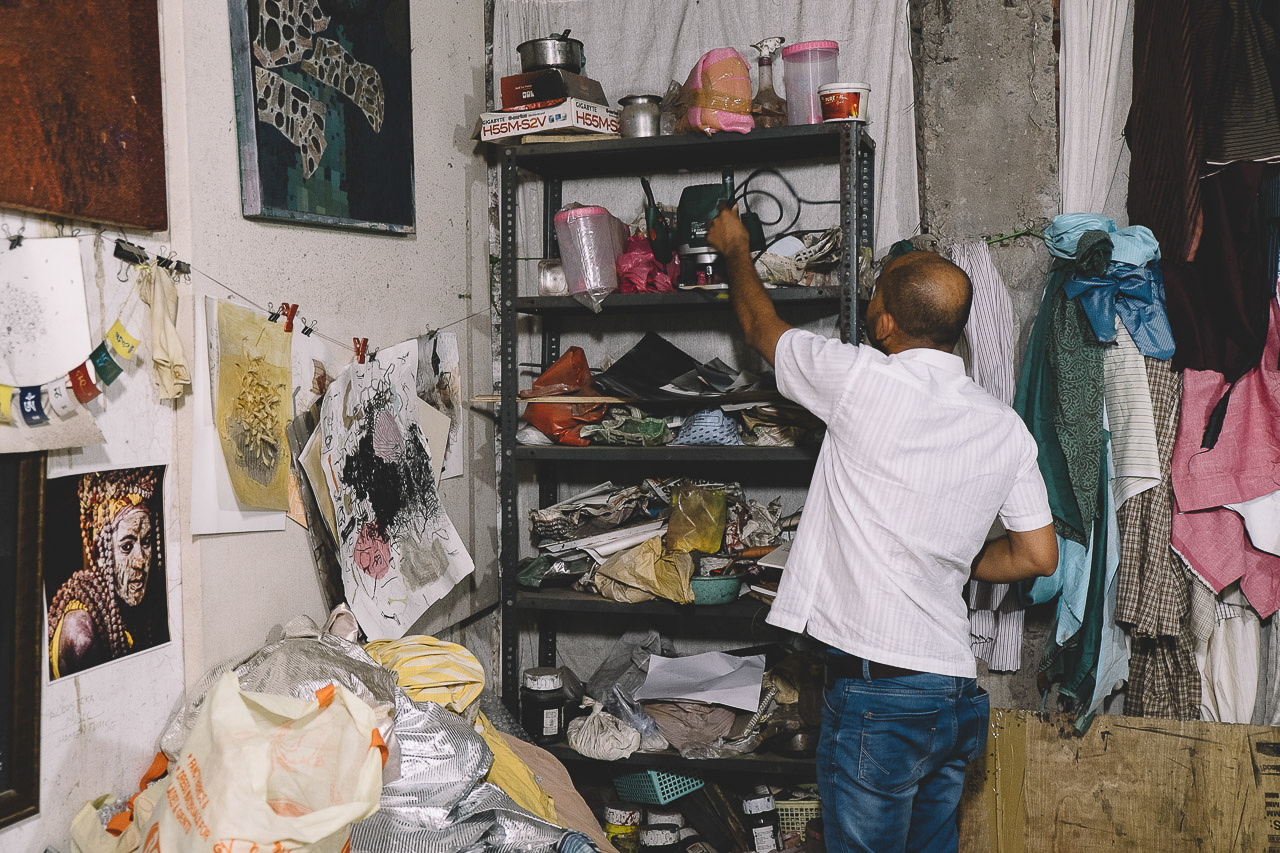
The studio was overflowing with paintings, tools, cloth, pigments, wood, unfinished works and countless objects whose purpose only the artist understood. The electricity disappeared without warning. The fans stopped. The room became even quieter, yet the work continued.
These photographs were never meant to be a catalogue of a studio. They became fragments of a place, a time and an artist’s journey. Some of the images carry stories that I still remember almost a decade later. Others simply record details that caught my eye that day. Together, they preserve a studio that has long since changed and a chapter in an artist’s life that can never be photographed again.
This is where the story begins.
“Follow me,” he said.
Still trying to catch my breath after climbing four flights of stairs, I followed him out of the studio and back towards the entrance. He stopped in front of a framed artwork hanging on an outside wall.
“What is this doing here?” I asked.
“I don’t have space inside,” he replied.
The painting had been left to face the weather. Water had marked its surface. Dust had settled into the frame. It stood there quietly, exposed to rain, heat and everything else Delhi could throw at it.
The entrance itself was as chaotic as the studio. A rusted grilled door guarded the staircase. Buckets, tools and everyday objects competed for space. On one side lay a neatly folded bedding.
“That’s for guests,” he said.
It struck me that there was no separation between work, storage and life. Every available corner had been claimed. The studio had spilled into the entrance because it had nowhere else to go. Even a finished artwork had become part of the architecture of survival.
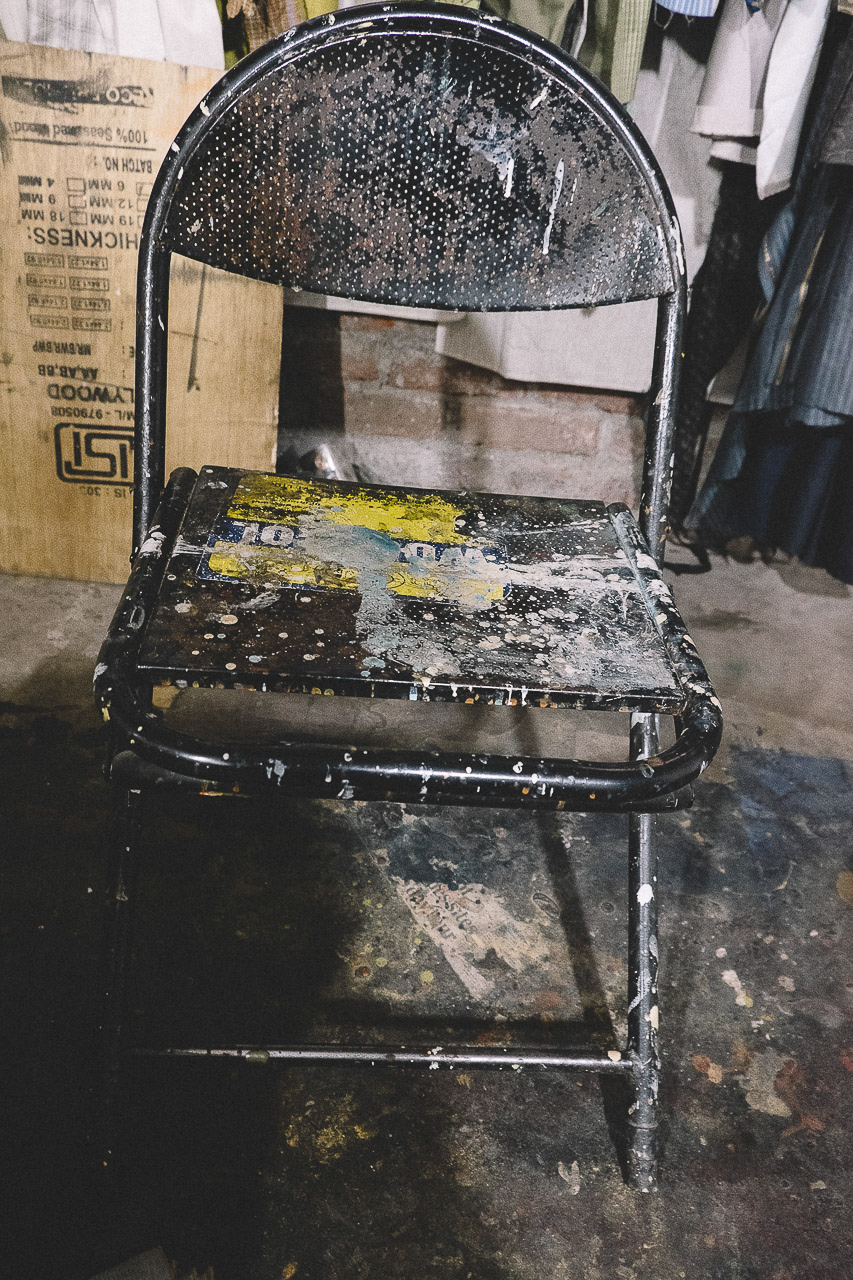
He pointed towards a chair covered in layers of dried paint.
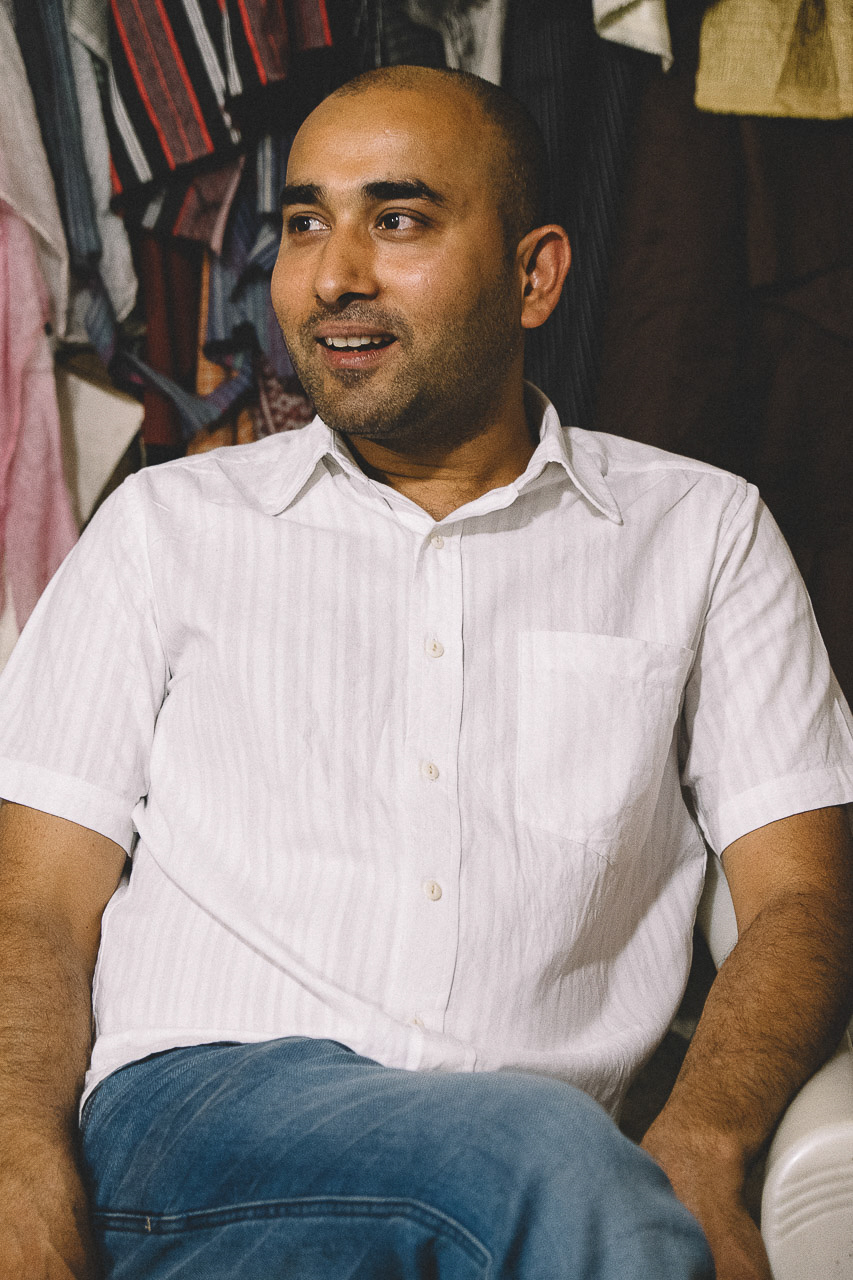
“Let’s sit.”
As we spoke, he was candid about the realities of being an artist. Every day was a struggle. There were months when selling work felt impossible. The studio was never simply a place to make art. It was a place to endure.
At one point he looked up towards the ceiling.
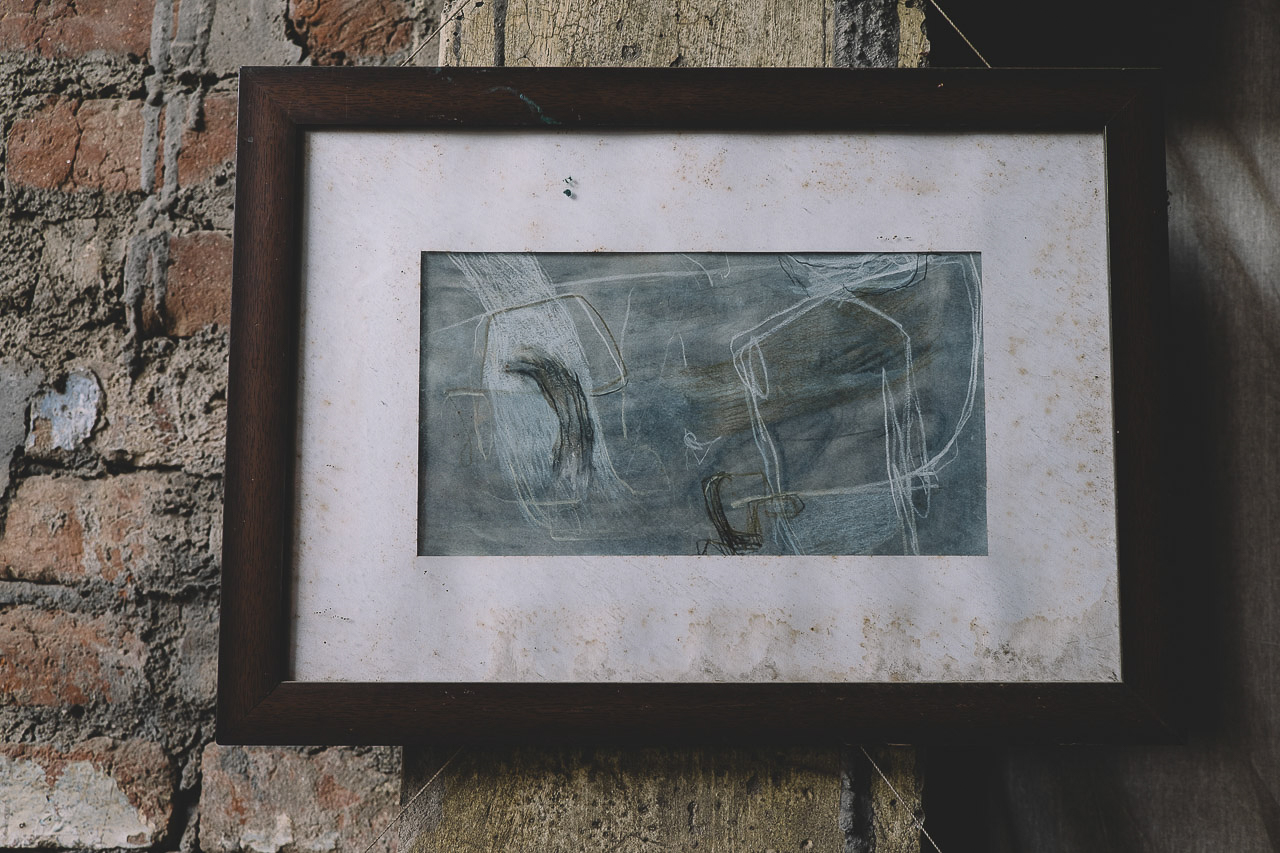
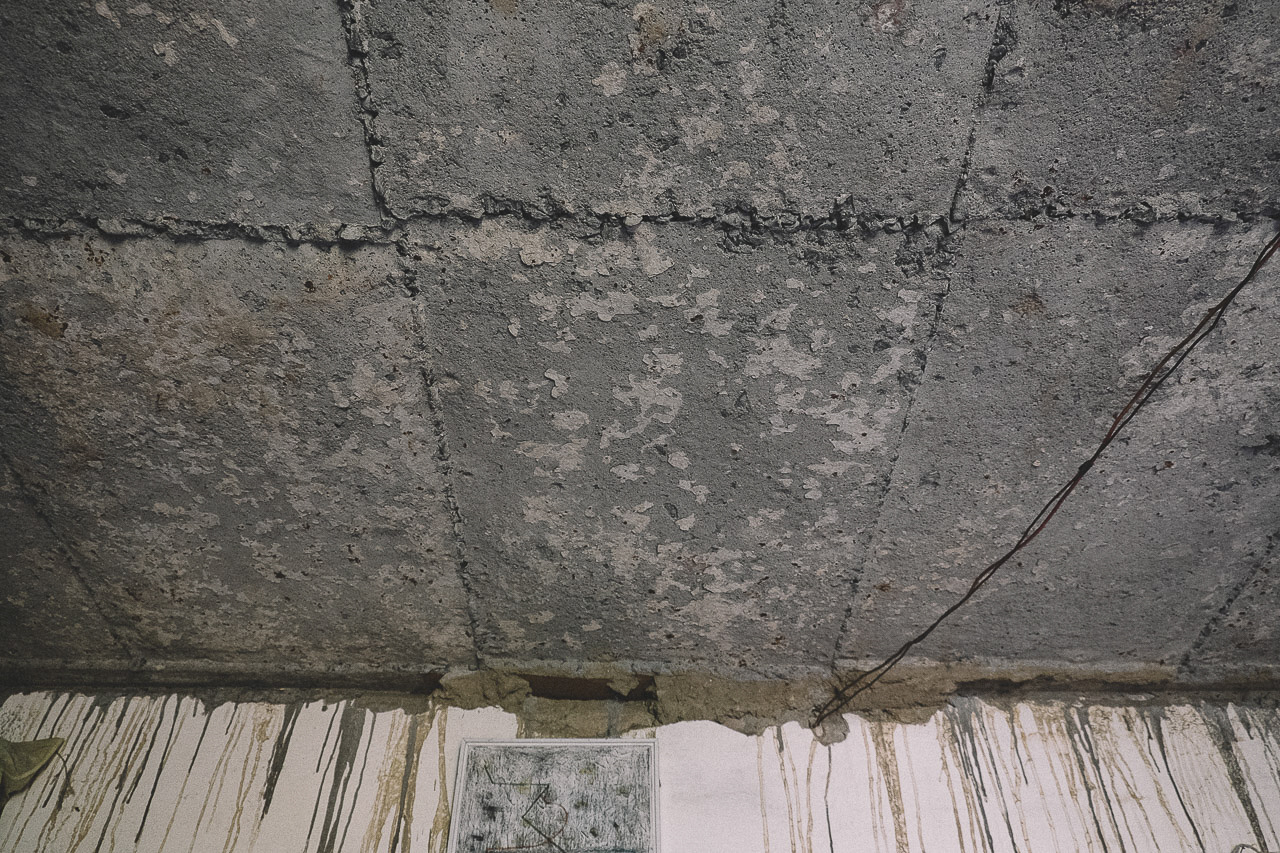
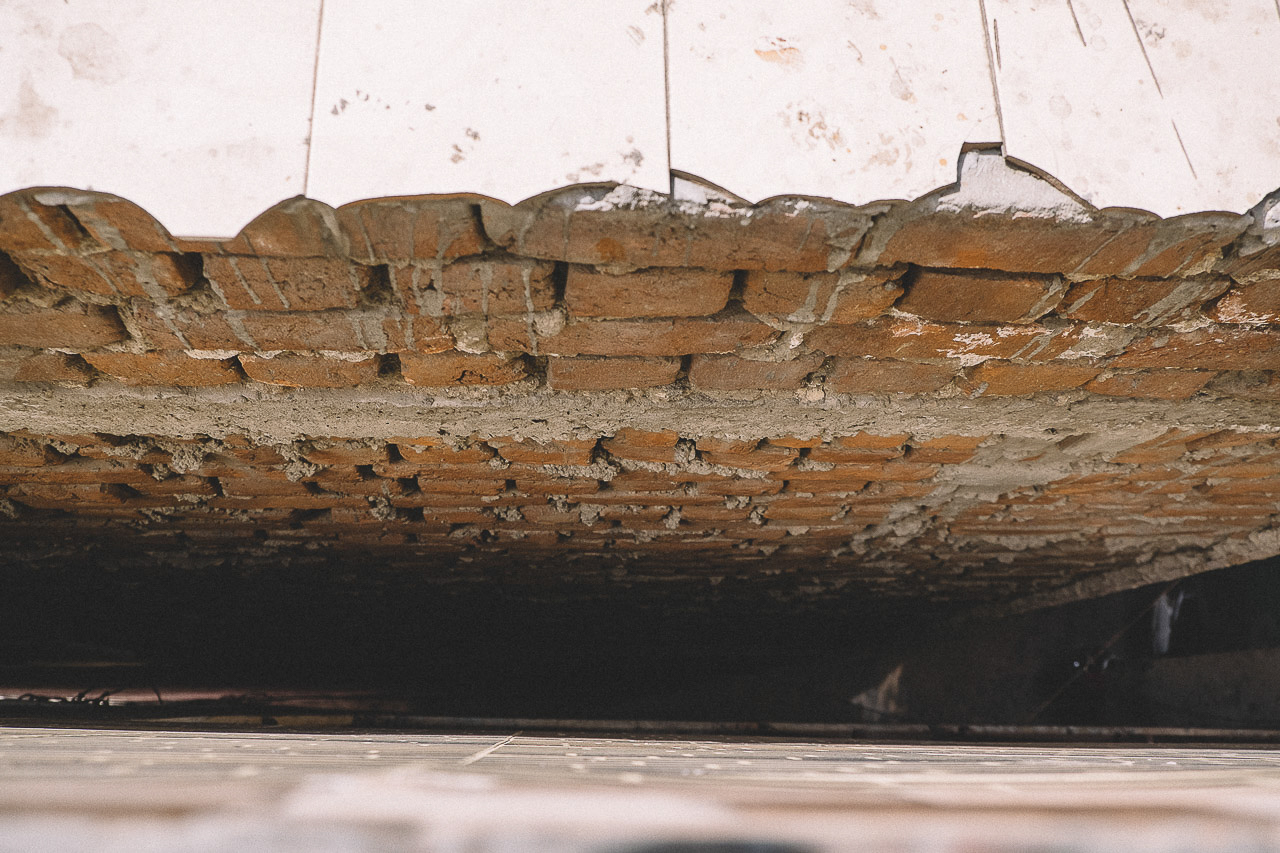
“You see those cement lanters?” he asked, pointing at the roof. “The textures in my work come from there.”
Then he pointed to the unfinished walls around us.
“And these walls. They find their way into the paintings too.”
It was a reminder that artists do not leave their surroundings outside the studio door. They absorb them. The building itself had become part of his visual language.
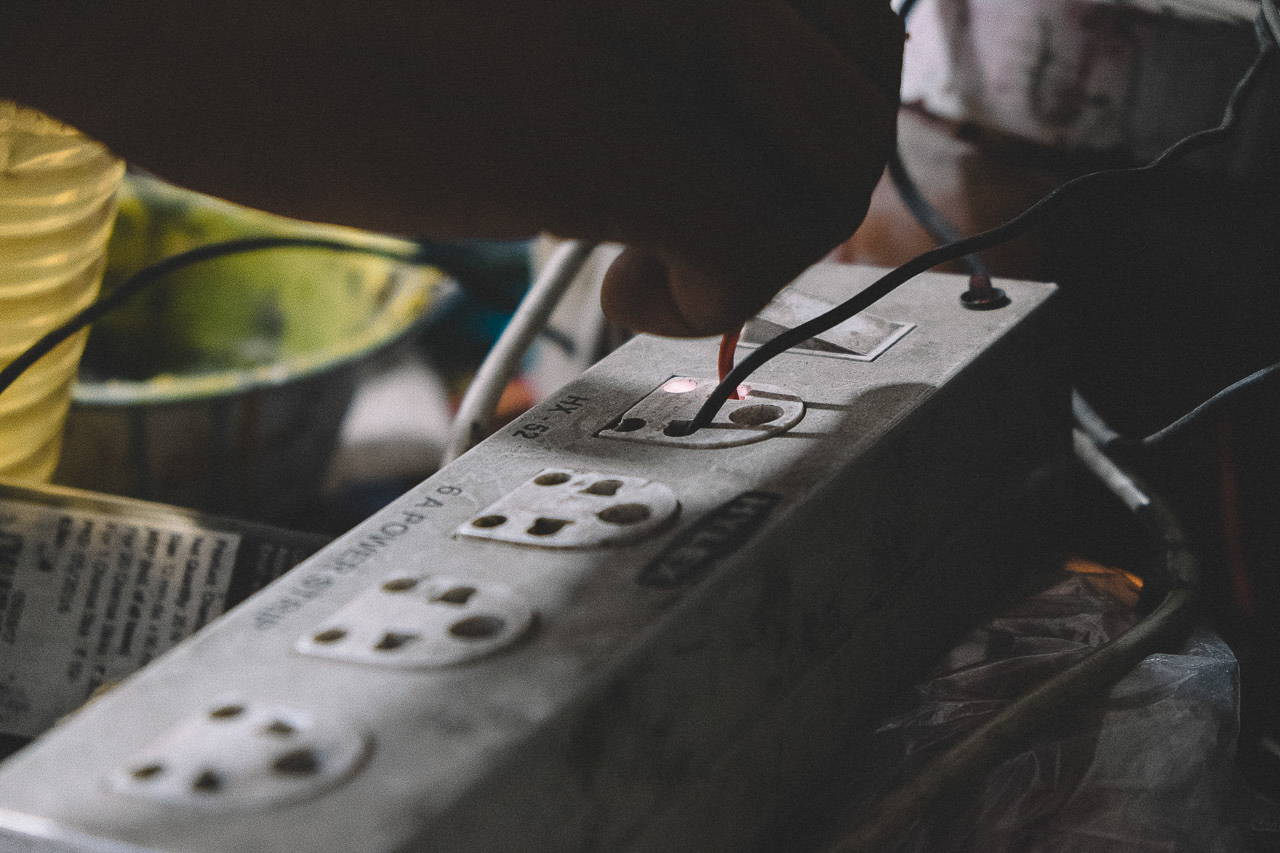
Just then the electricity disappeared.
The fan slowed to a stop. The room fell silent. Within minutes the heat became almost unbearable. We sat in the darkness without saying much.
“I’ll open the window for you,” he said.
He walked over to a cluster of exposed wires and tried a familiar trick that, judging by his confidence, he had attempted many times before. Nothing happened. We smiled and waited.
A few minutes later, the lights returned in their own sweet time. The fan began turning again and the conversation continued as if nothing unusual had happened. For Abhijit, it clearly wasn’t unusual. It was simply another working day.
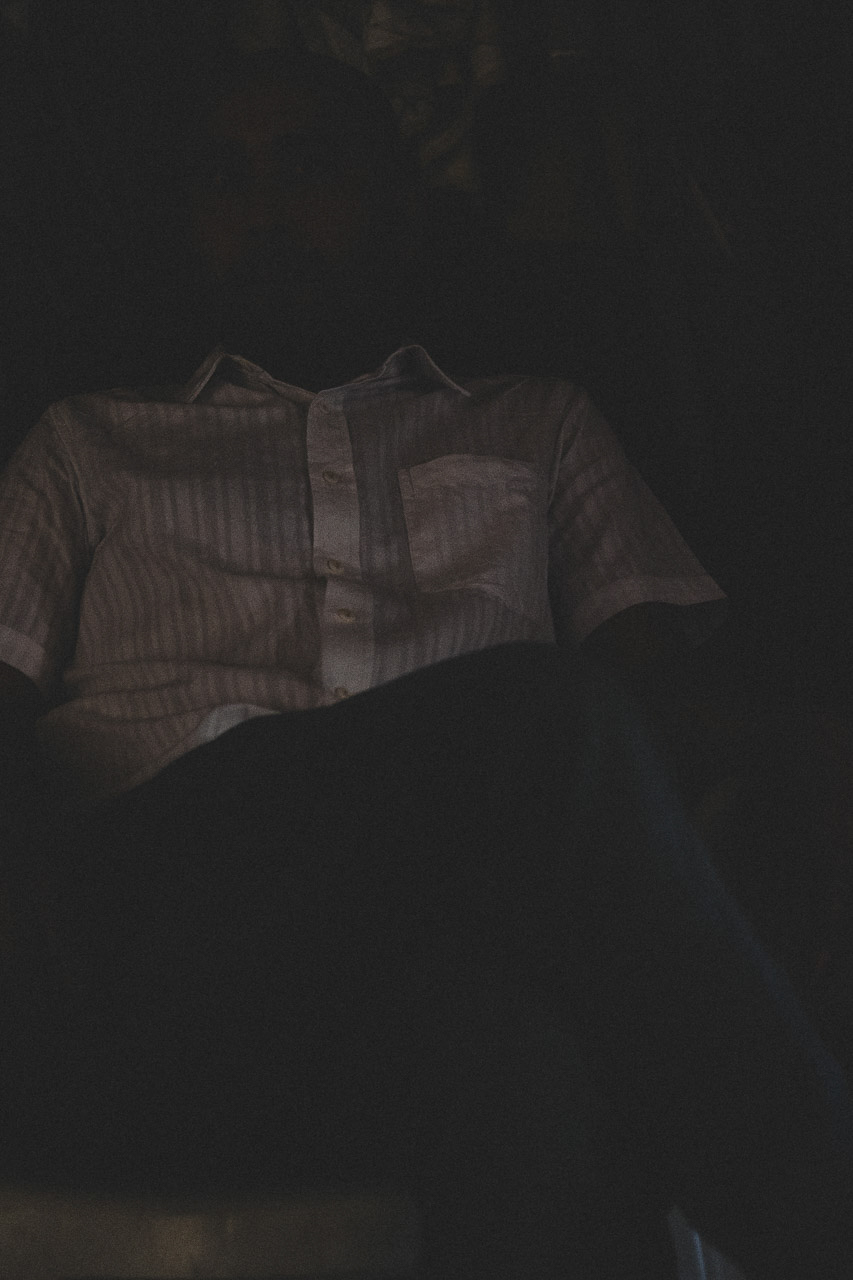
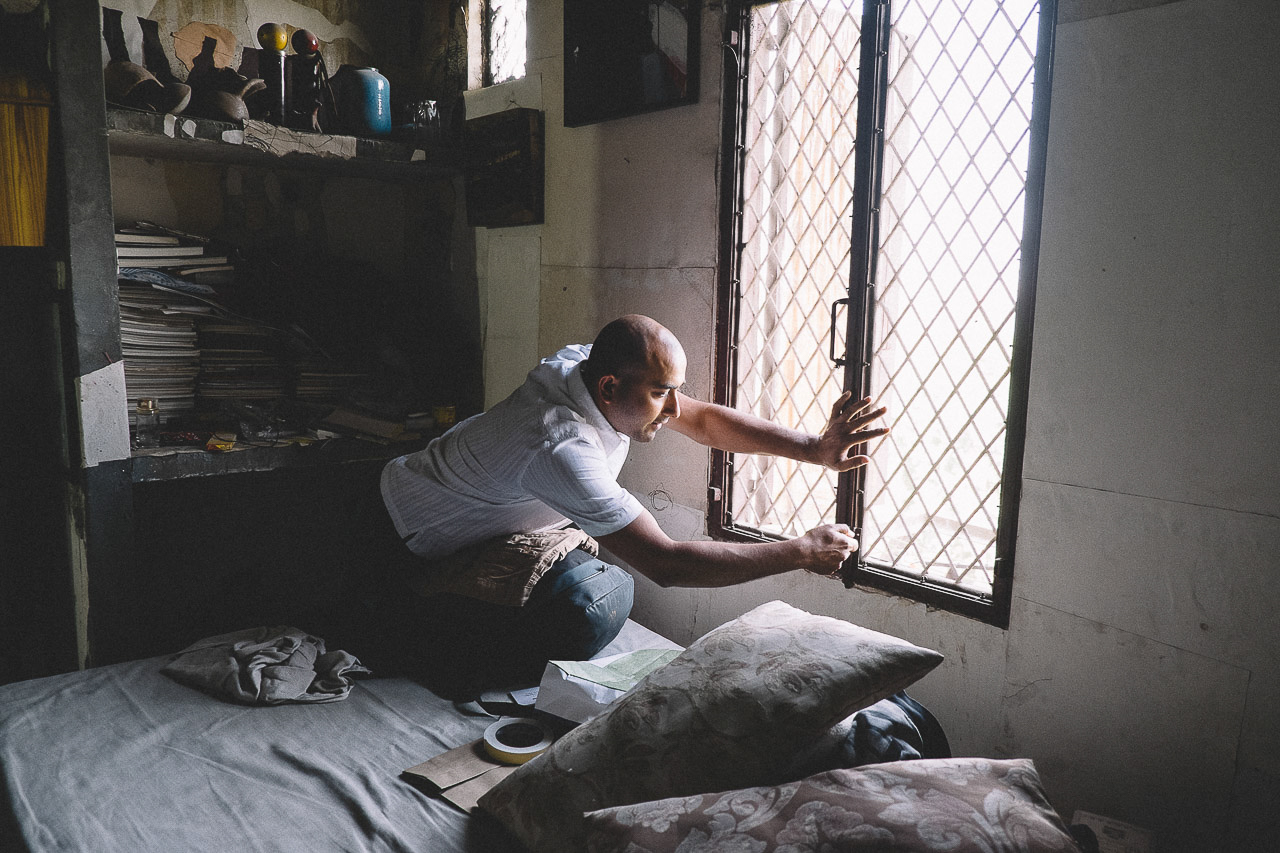
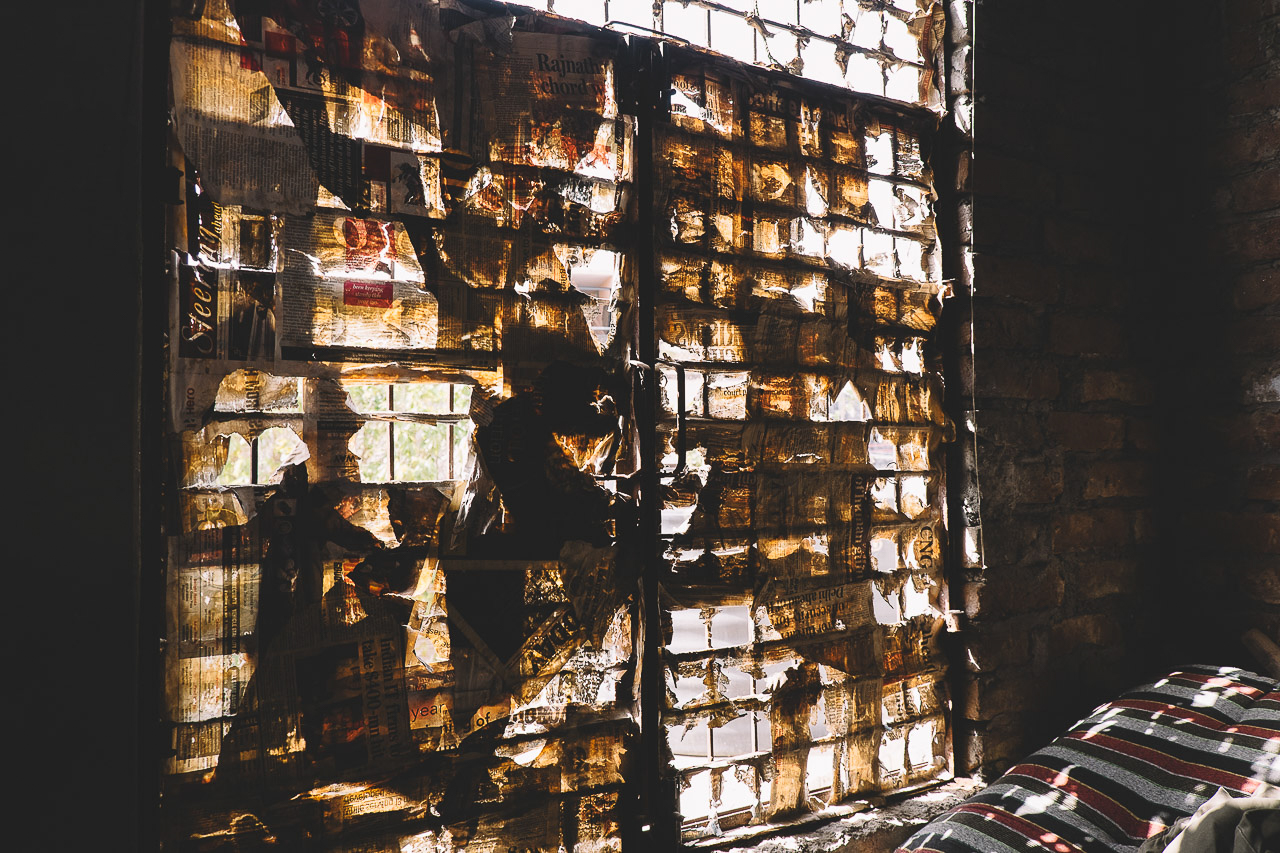
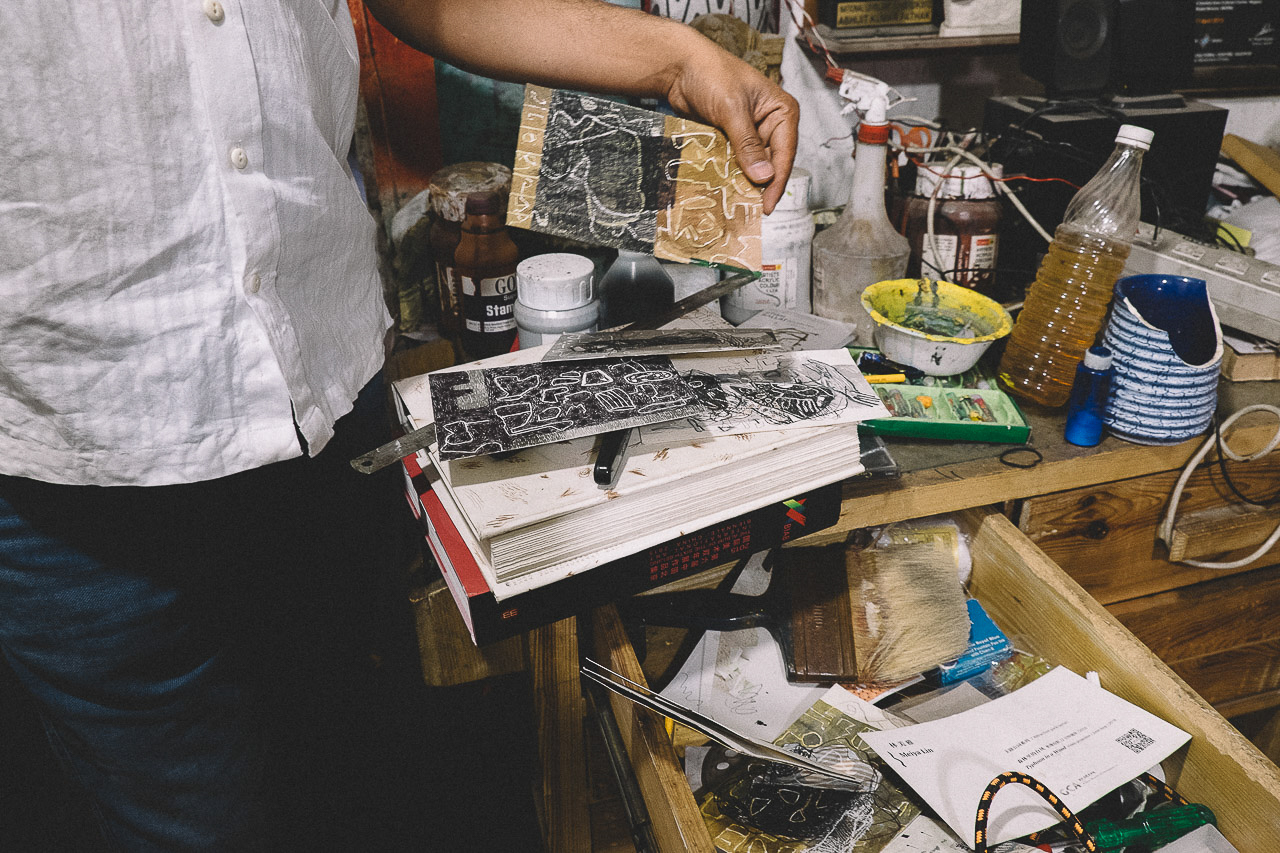
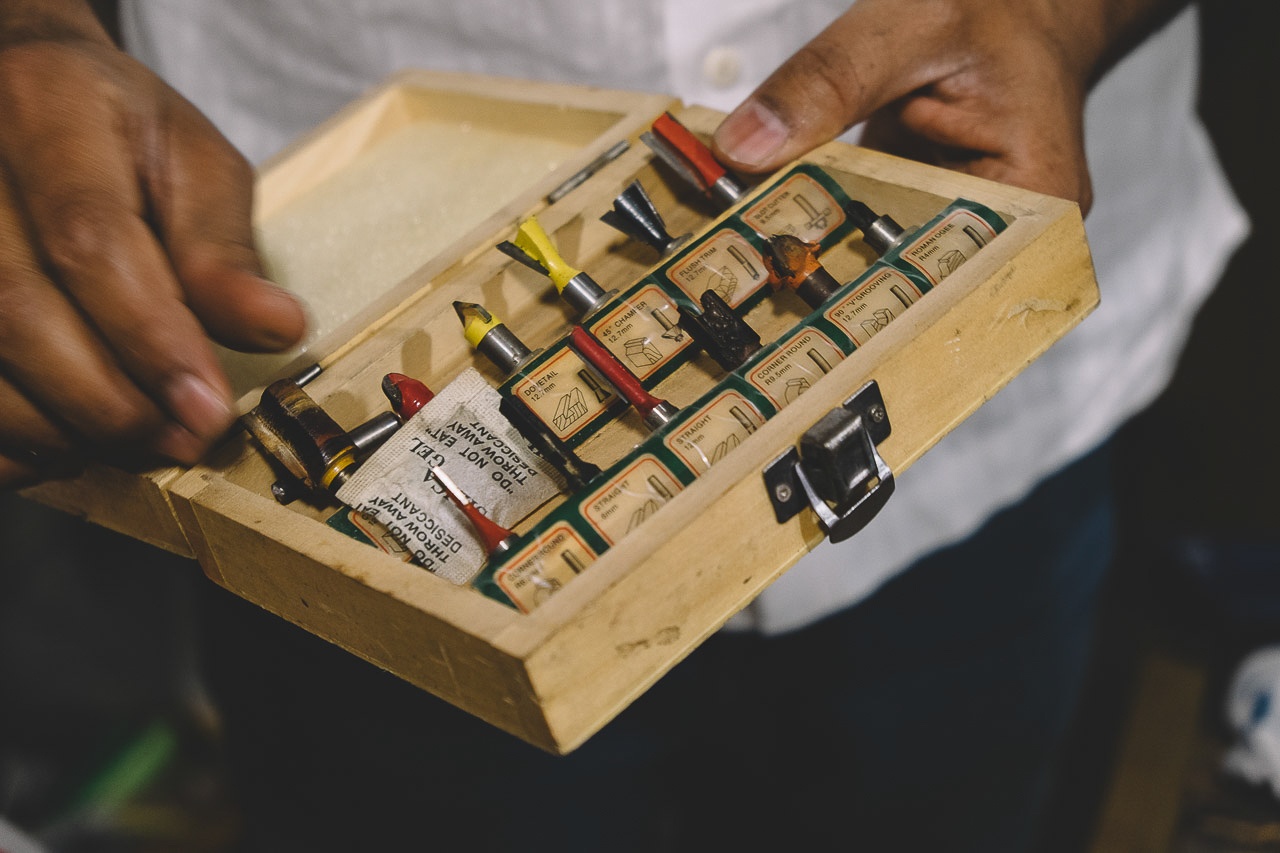
We spoke for a long time about his practice. The conversation moved from materials to process, from the tools he relied on to the books he returned to. Every answer seemed to point back to the studio itself.
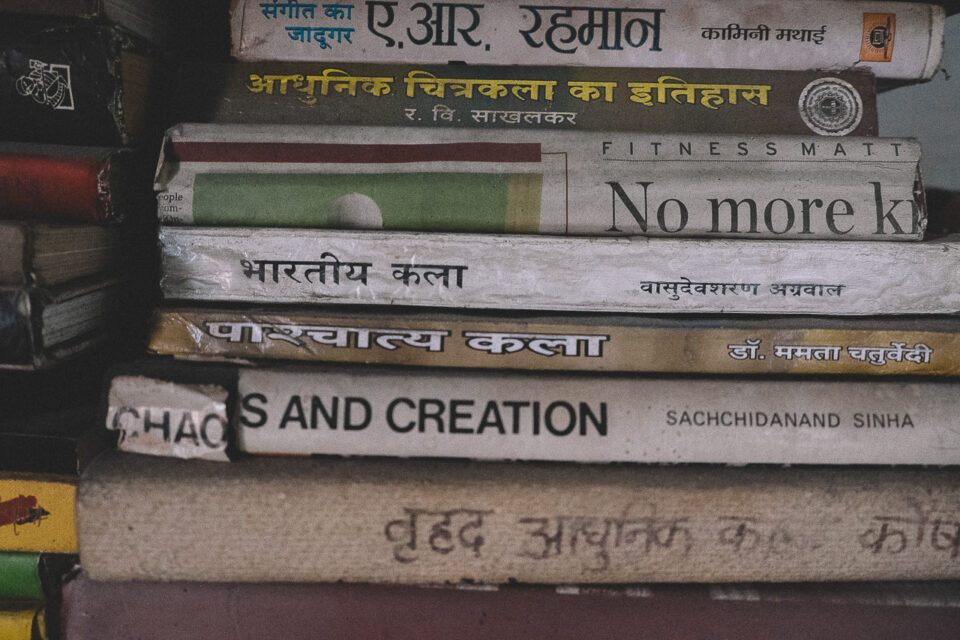
As I looked around, my eyes settled on a dusty shelf. A book lay there with the title Chaos and Creation.
I smiled. The photo essay had found its name.
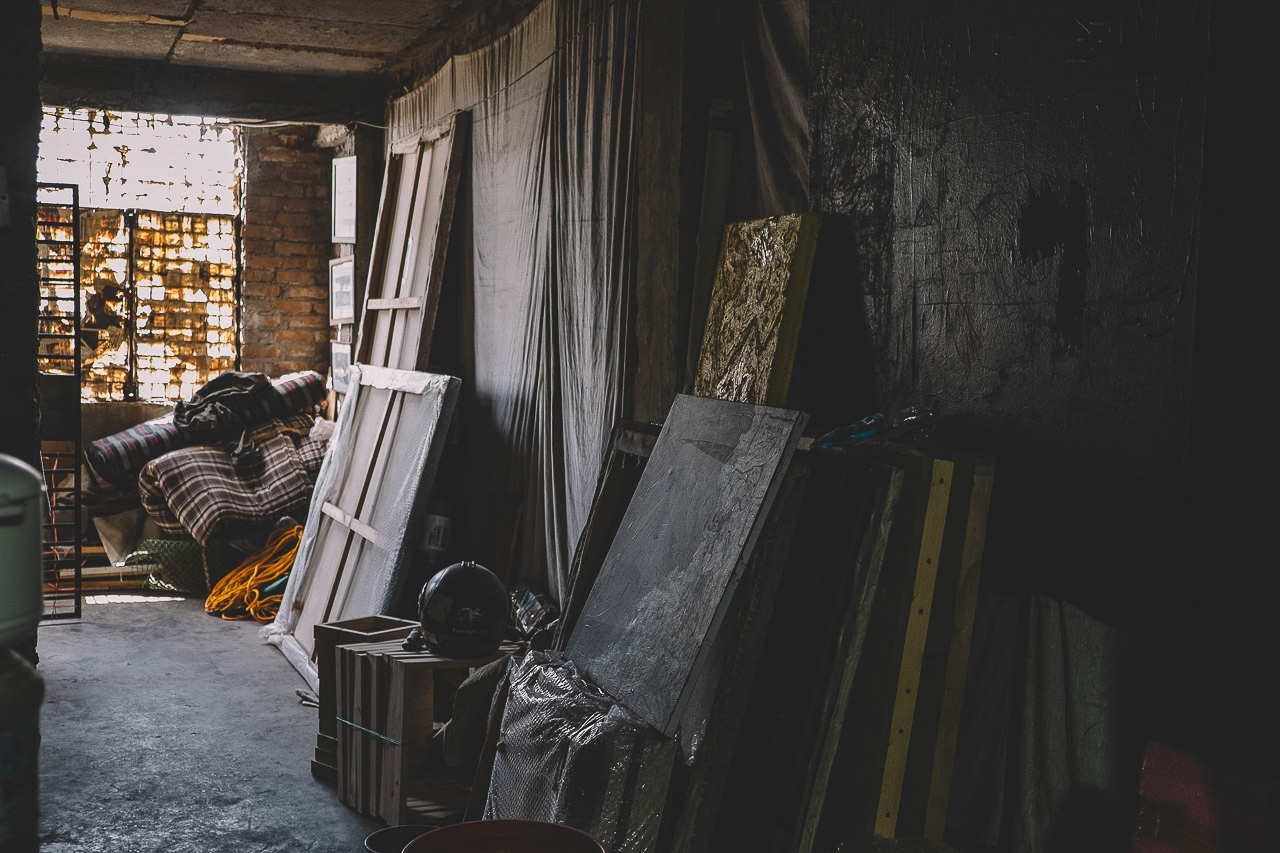
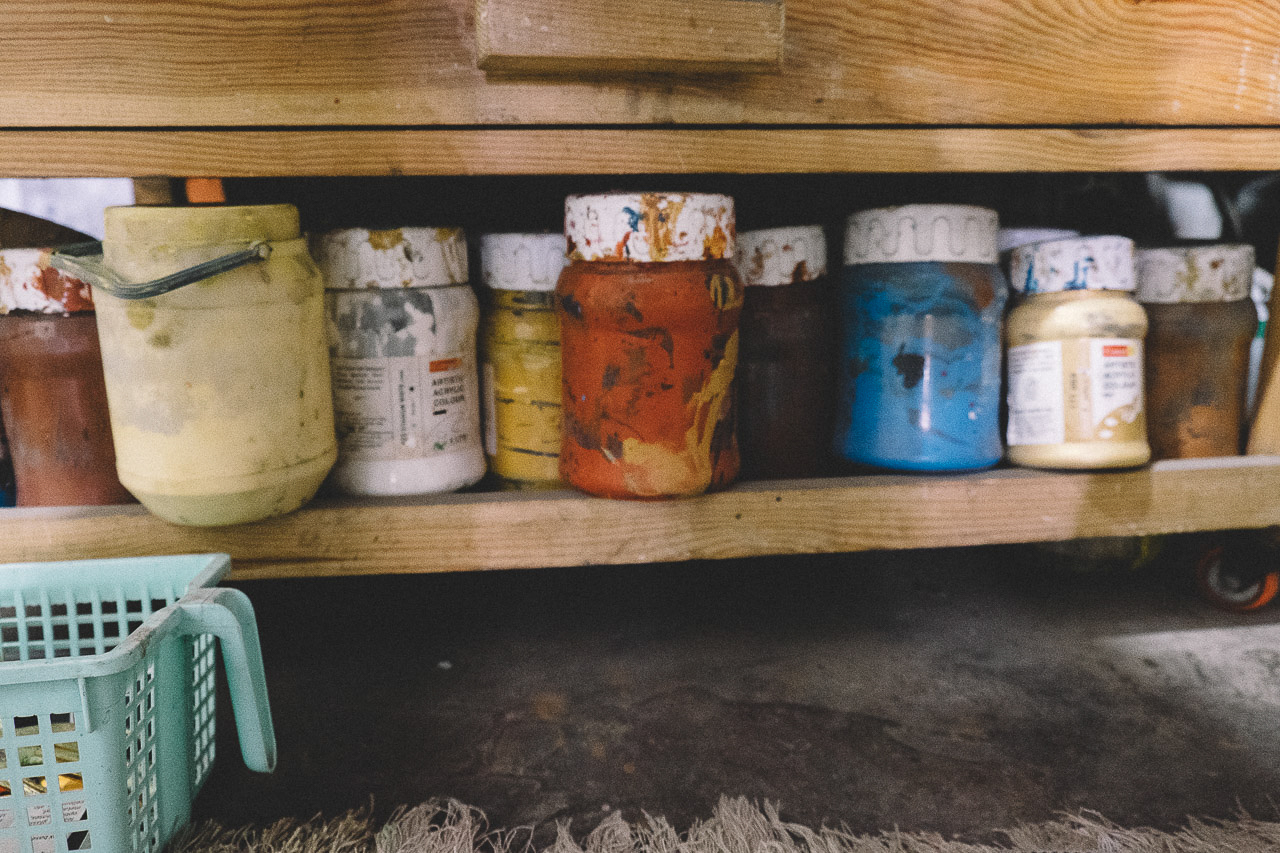
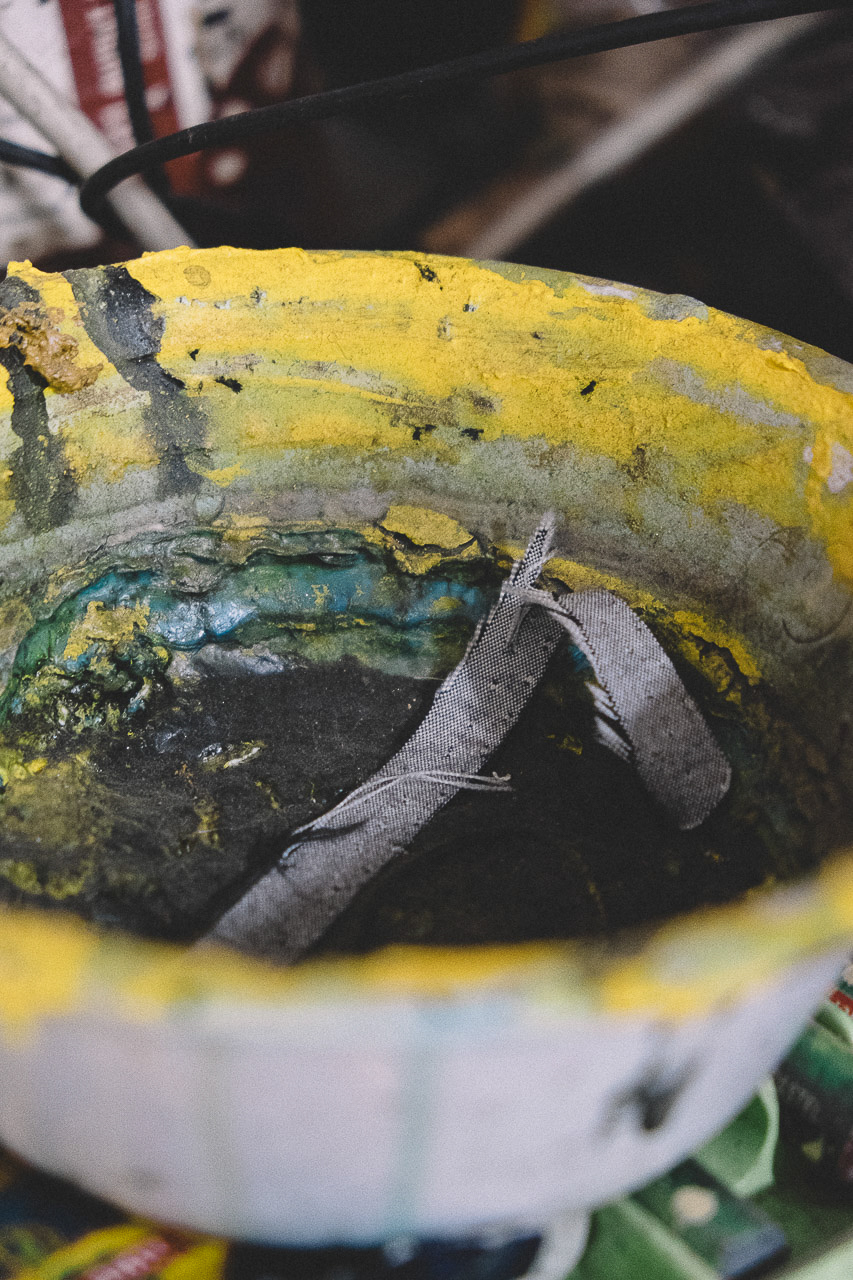
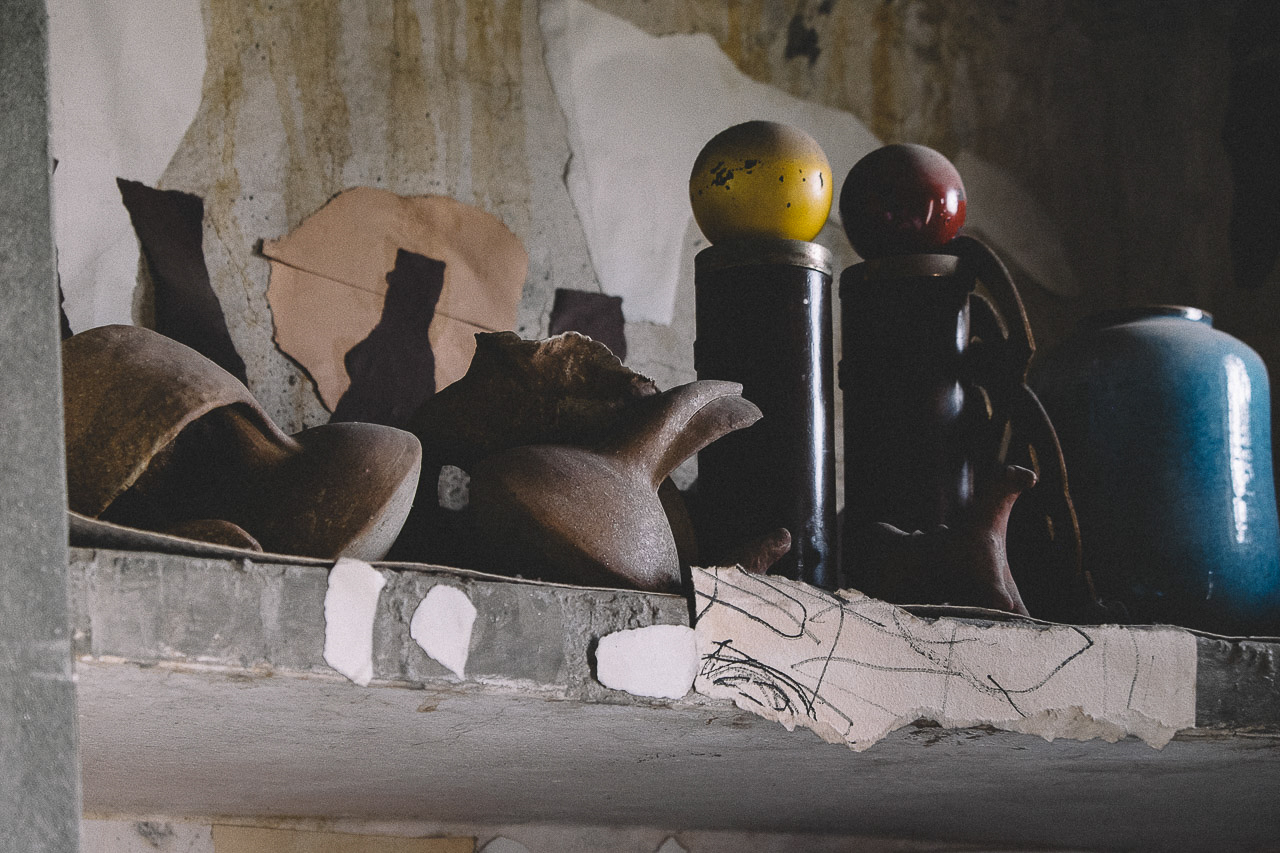
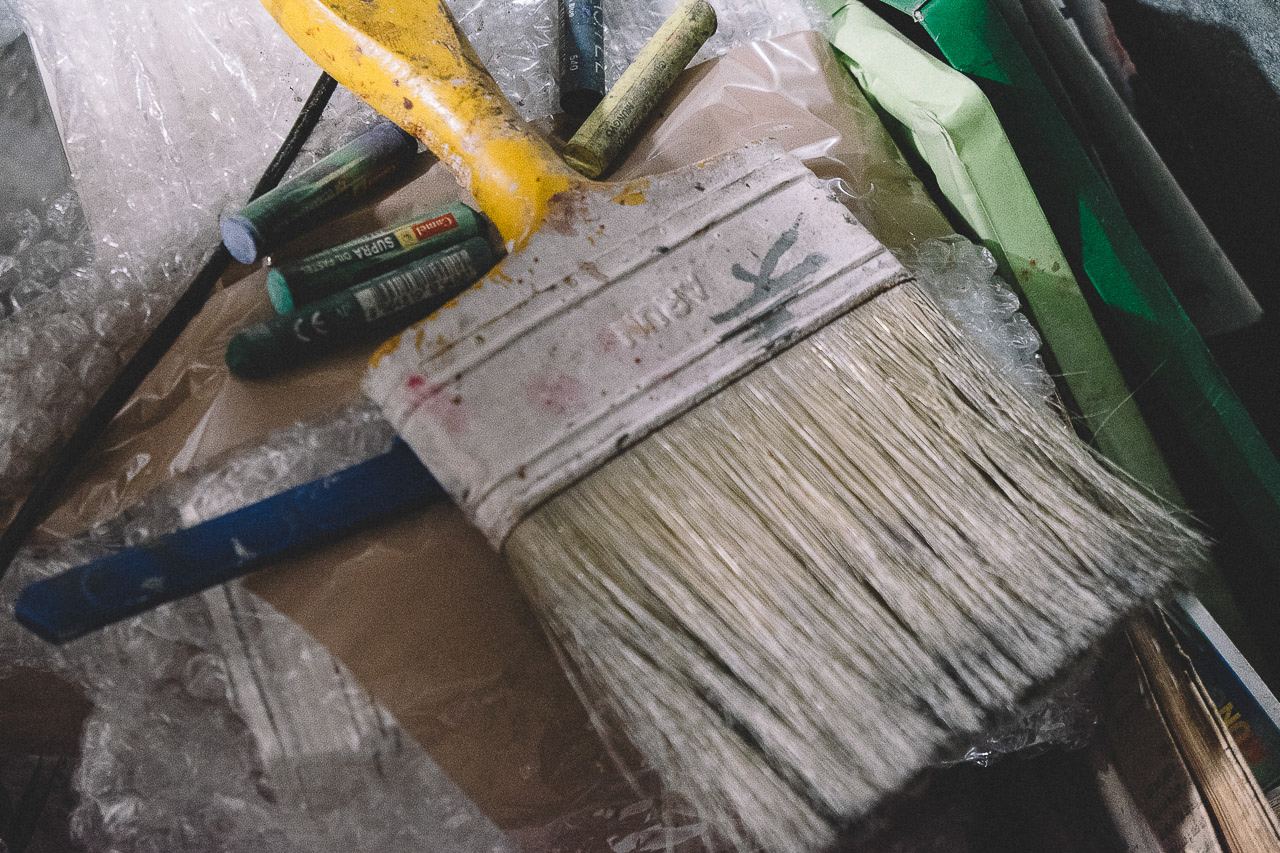
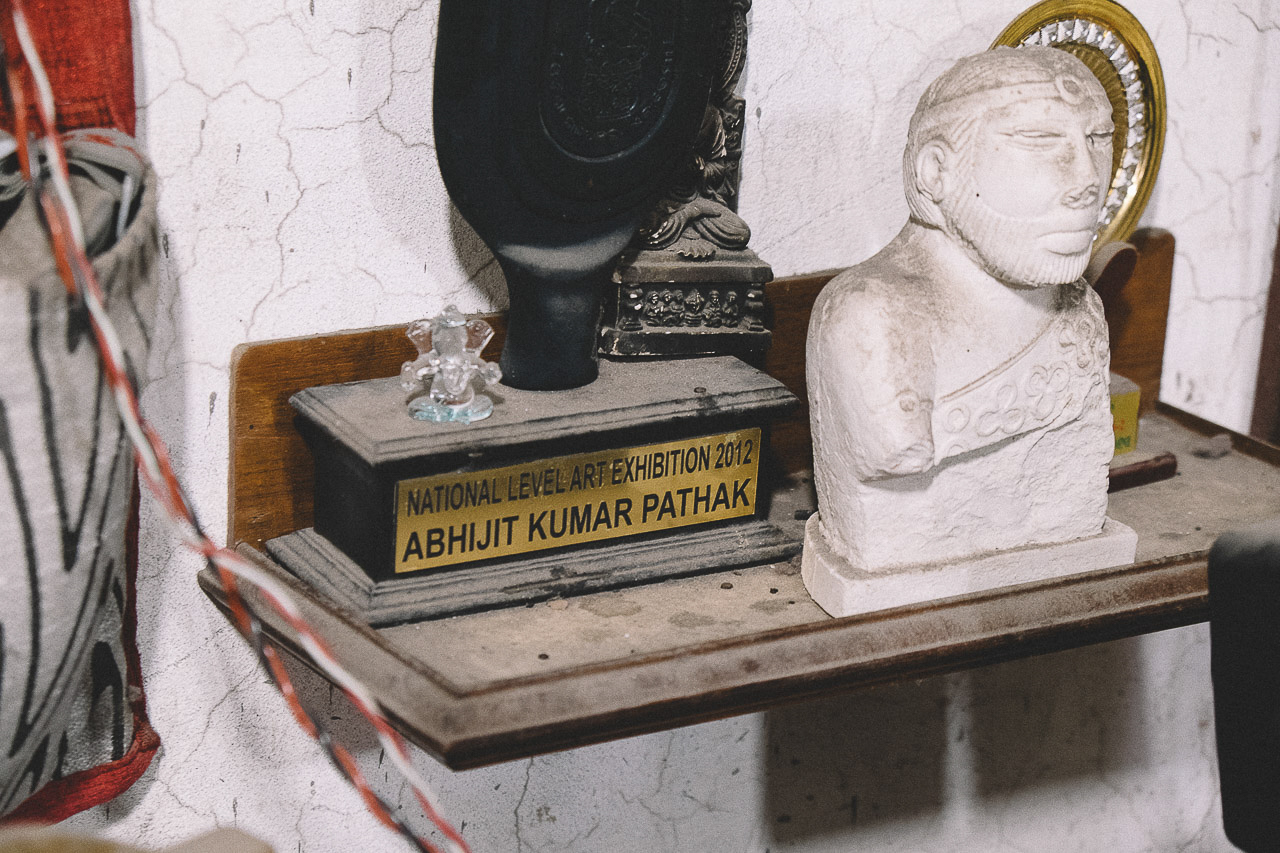
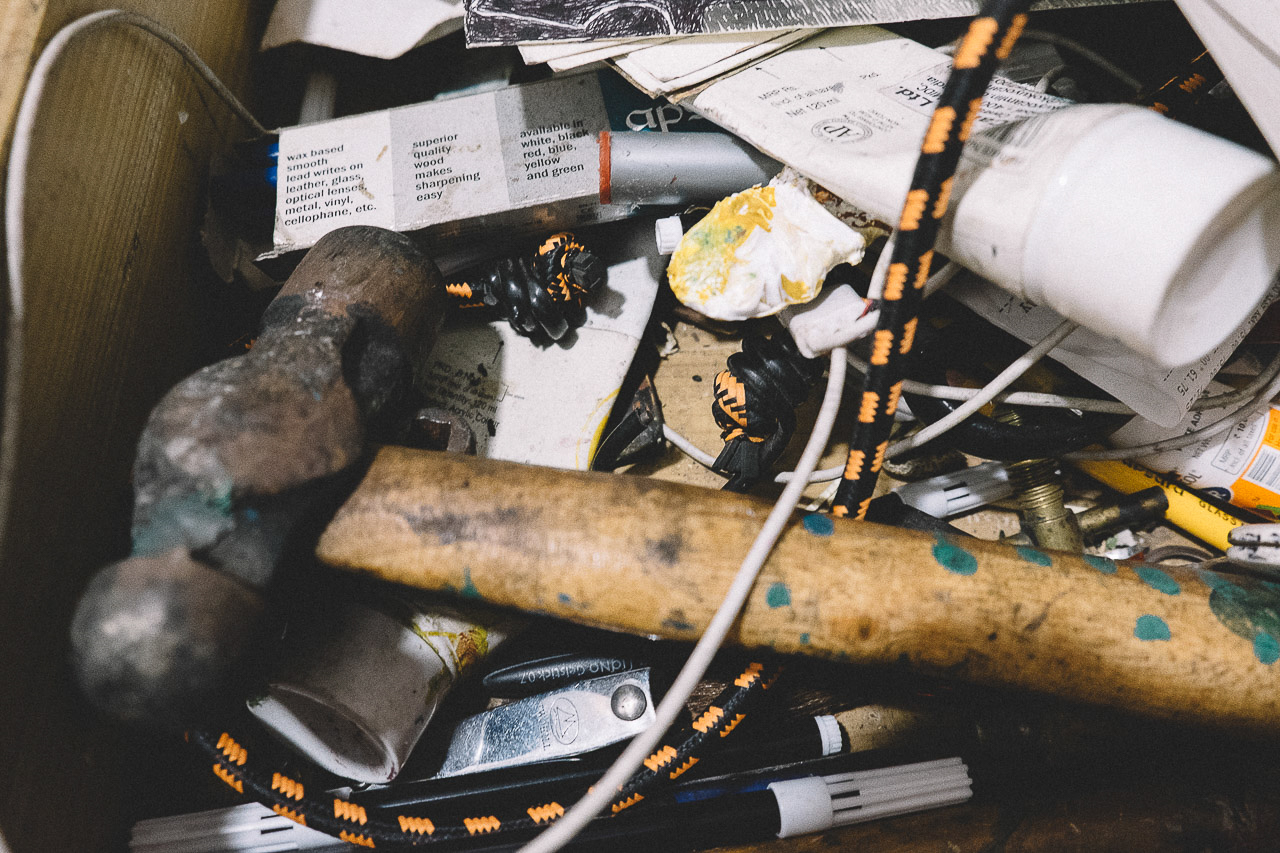
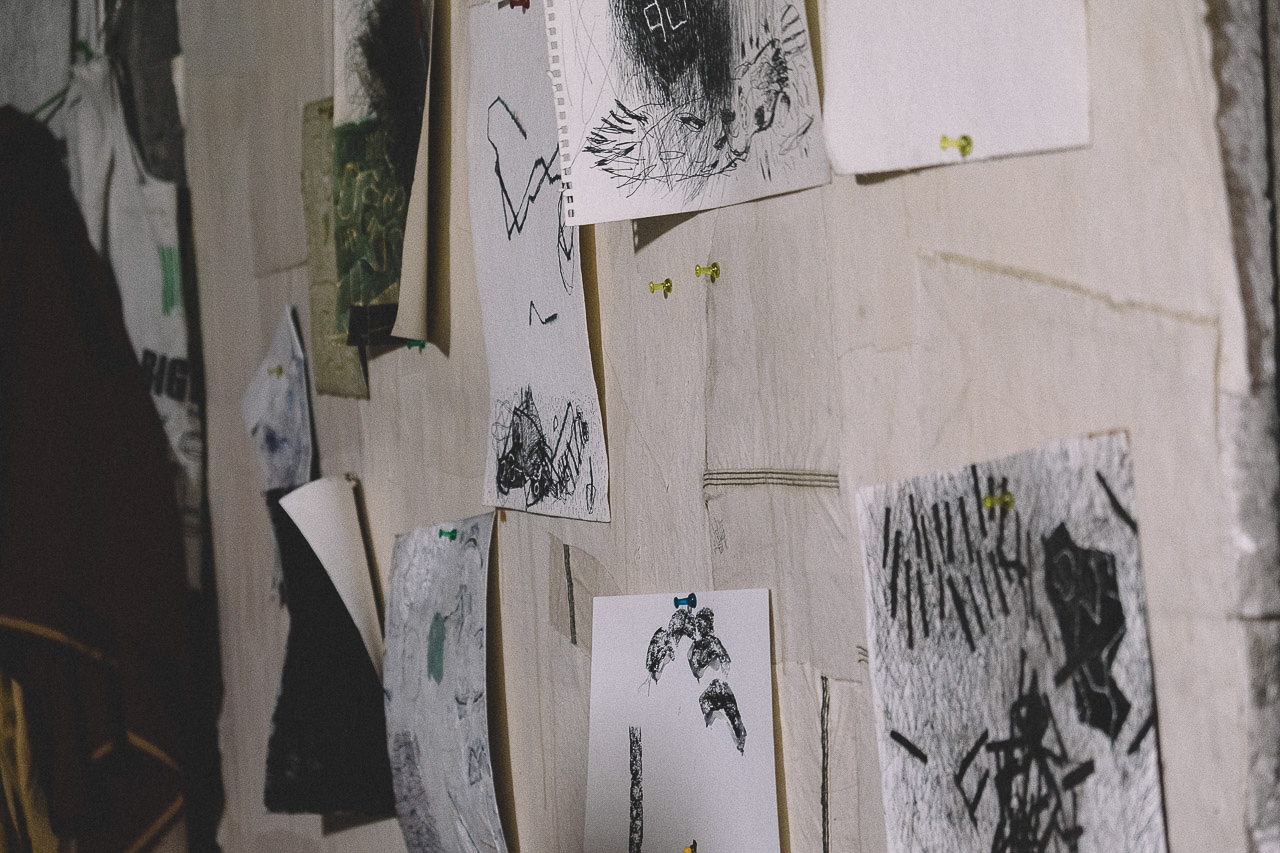
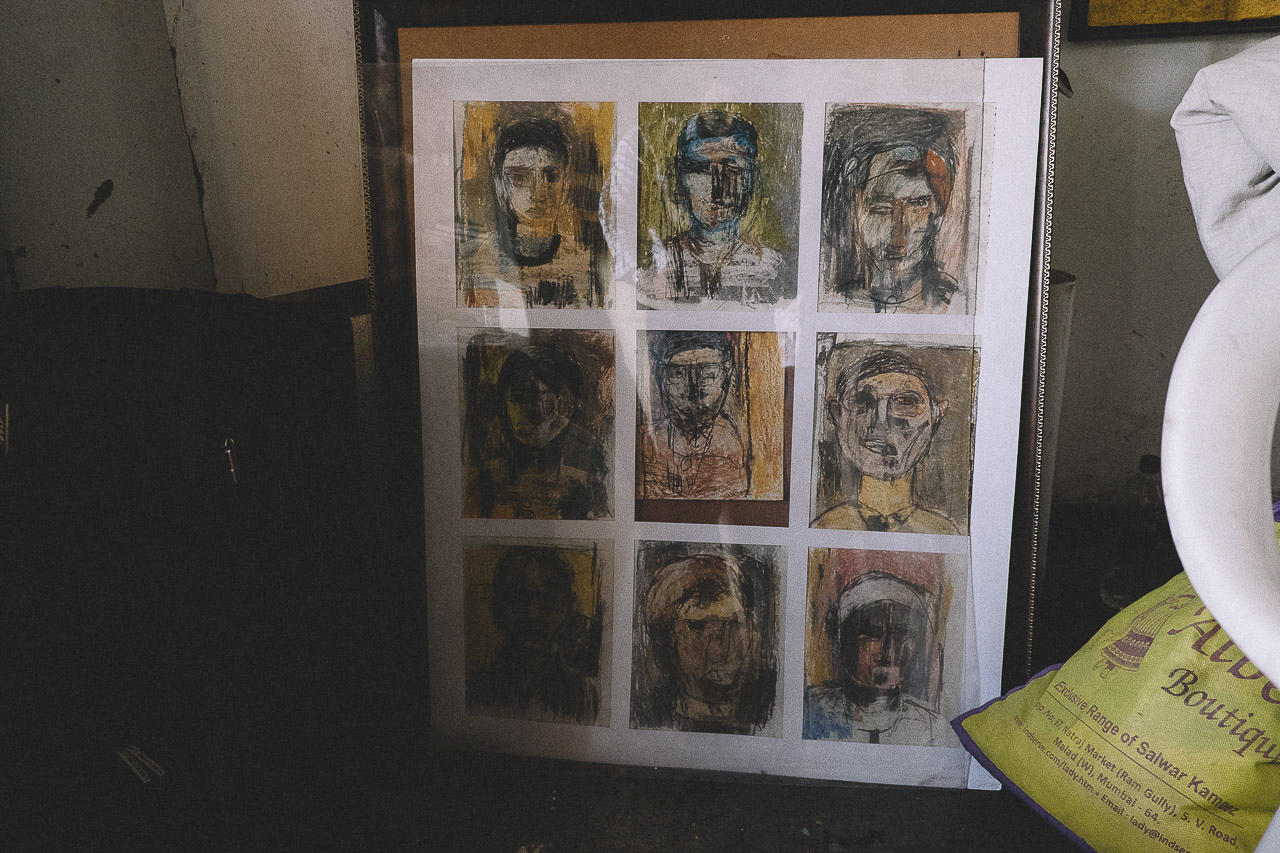
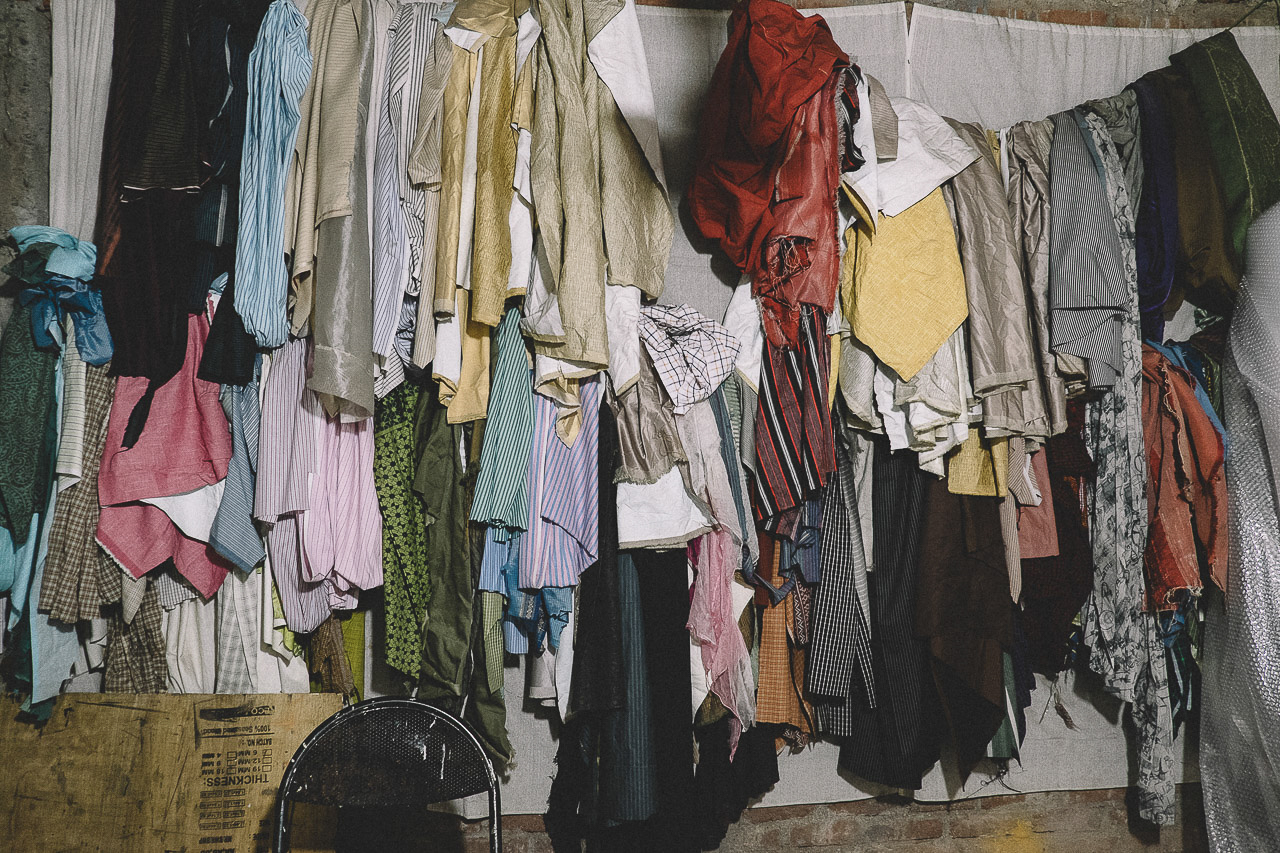
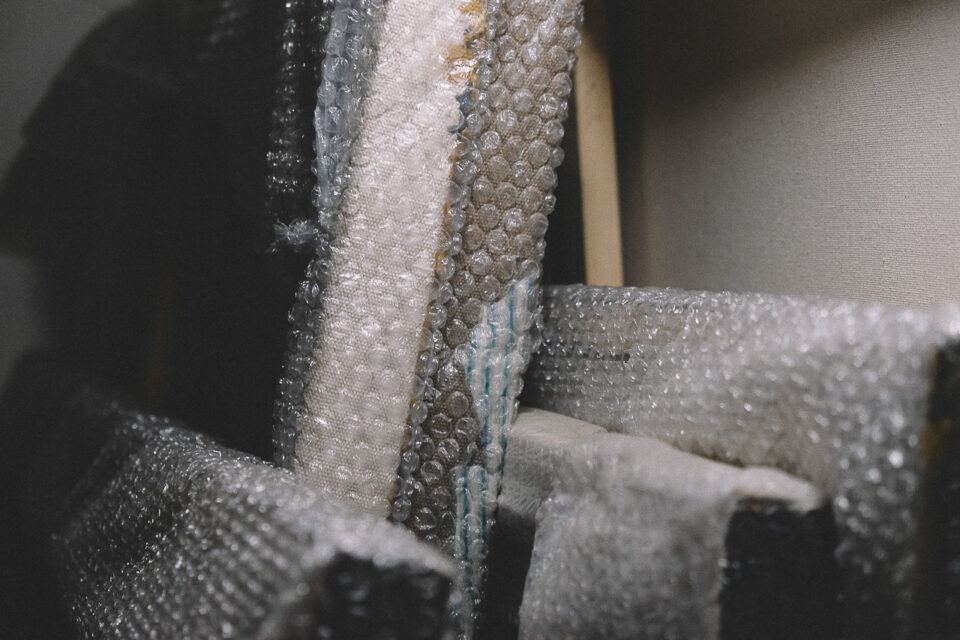
The studio suddenly made even more sense. What had first appeared as disorder was, in fact, a working system. Pieces of cloth hung from nails, waiting to become part of a painting. Sheets of paper carried quick sketches and forgotten ideas. Canvases leaned against one another. Paint brushes stood in old containers. Awards shared space with dust. Nothing announced its importance. Everything belonged.
It was chaotic. It was also deeply personal. Every object had earned its place. Every surface carried the marks of work. The studio was not simply where Abhijit Pathak made paintings. It was where his visual language slowly took shape.

Just as I was getting ready to leave, Abhijit said, “Before you go, I want to show you one last thing.”
“Don’t be scared.”
I knew I would be.
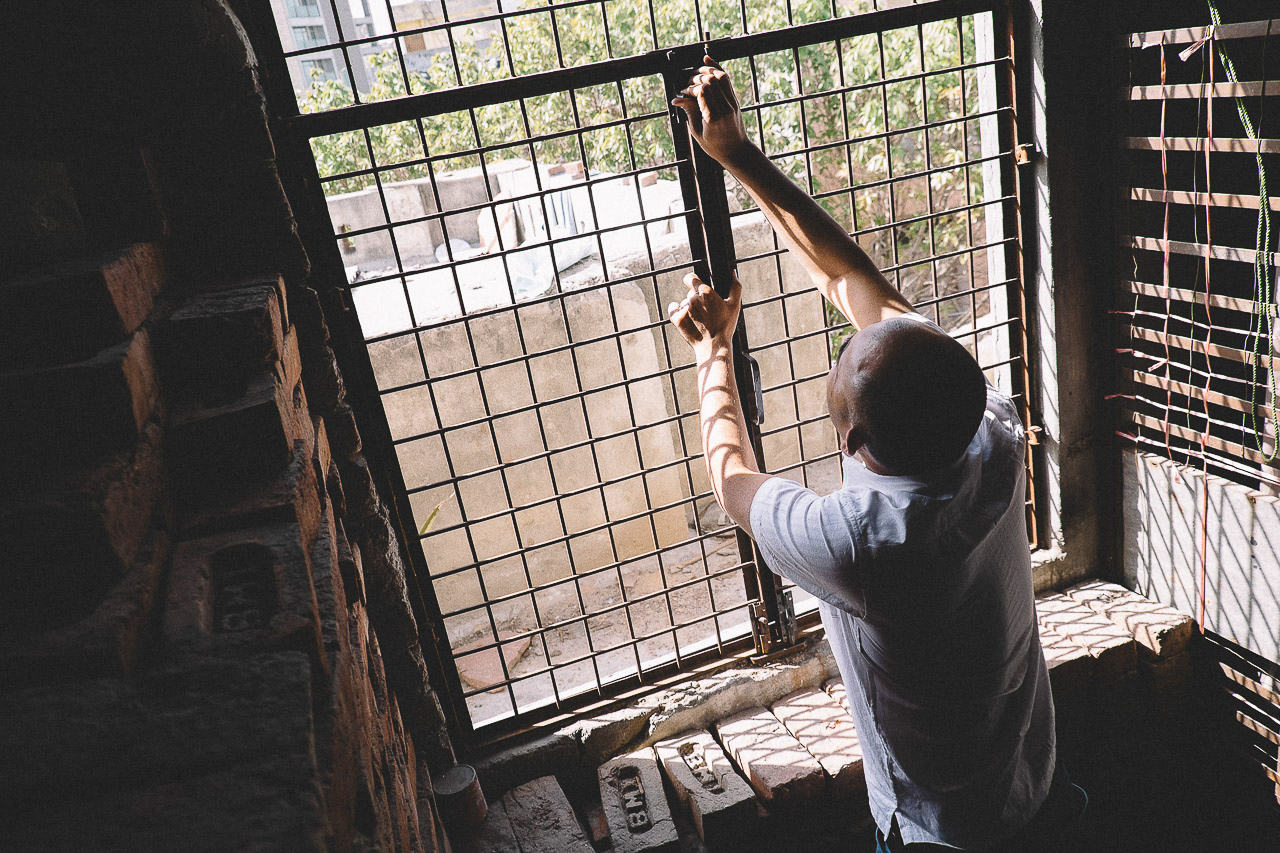
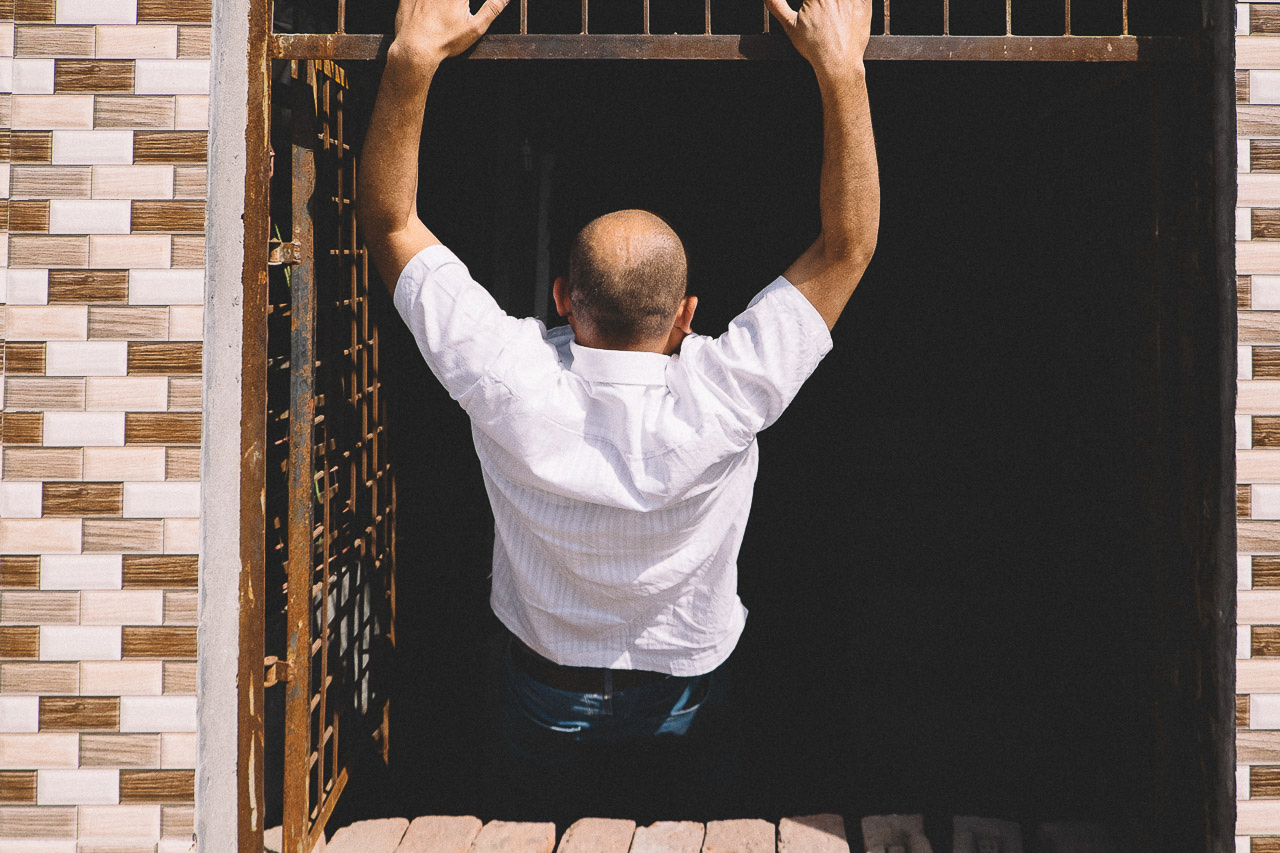
He led me out of the studio and towards a small window.
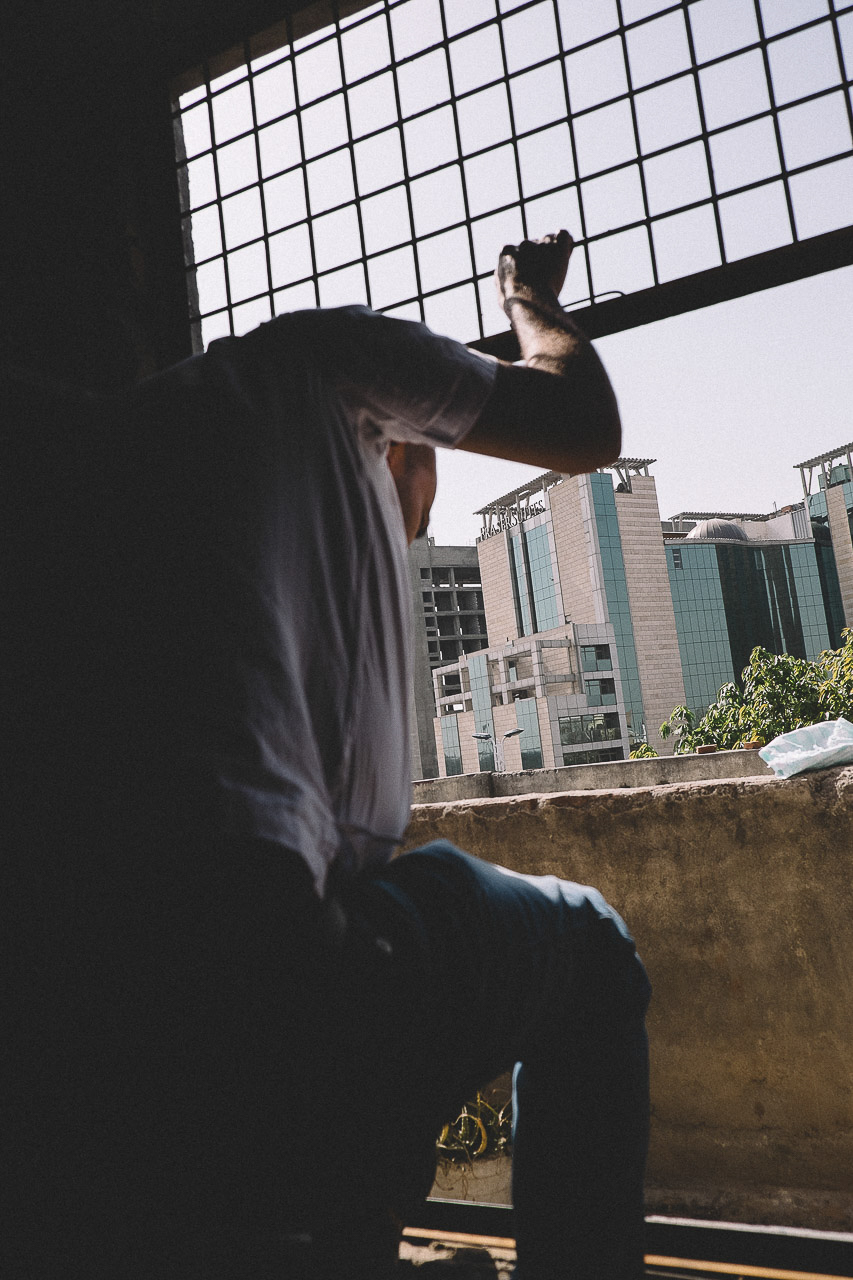
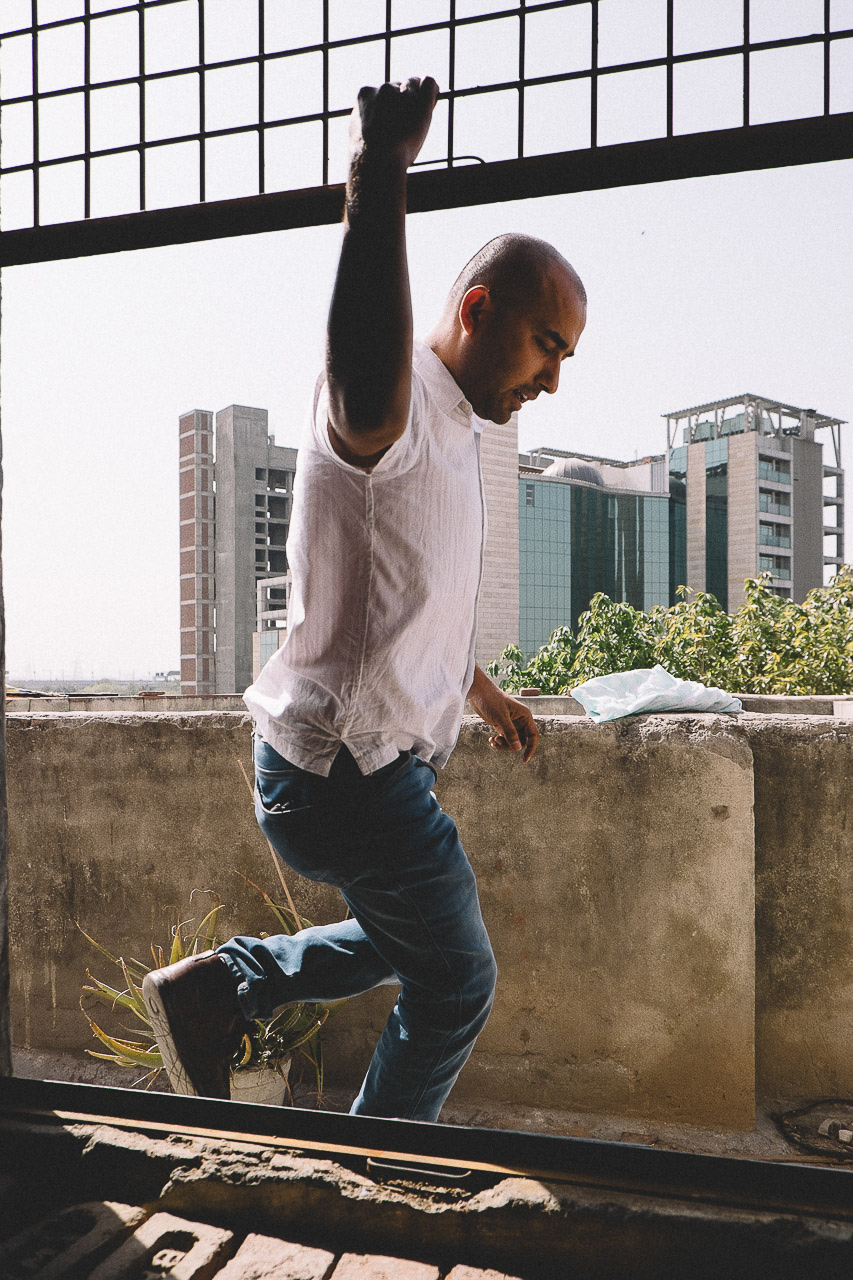
“We have to go through here,” he said. “Be careful. If you miss the step, it’s four floors down.”
There was no choice but to trust him. I climbed through the window, stepped across the gap and landed on the neighbour’s roof. We made our way carefully across the uneven surface until we reached a spot overlooking the outside wall of the studio.
He pointed upwards.
“This is where I dry my large canvases,” he said. “There isn’t enough space inside.”
I stood there in silence.
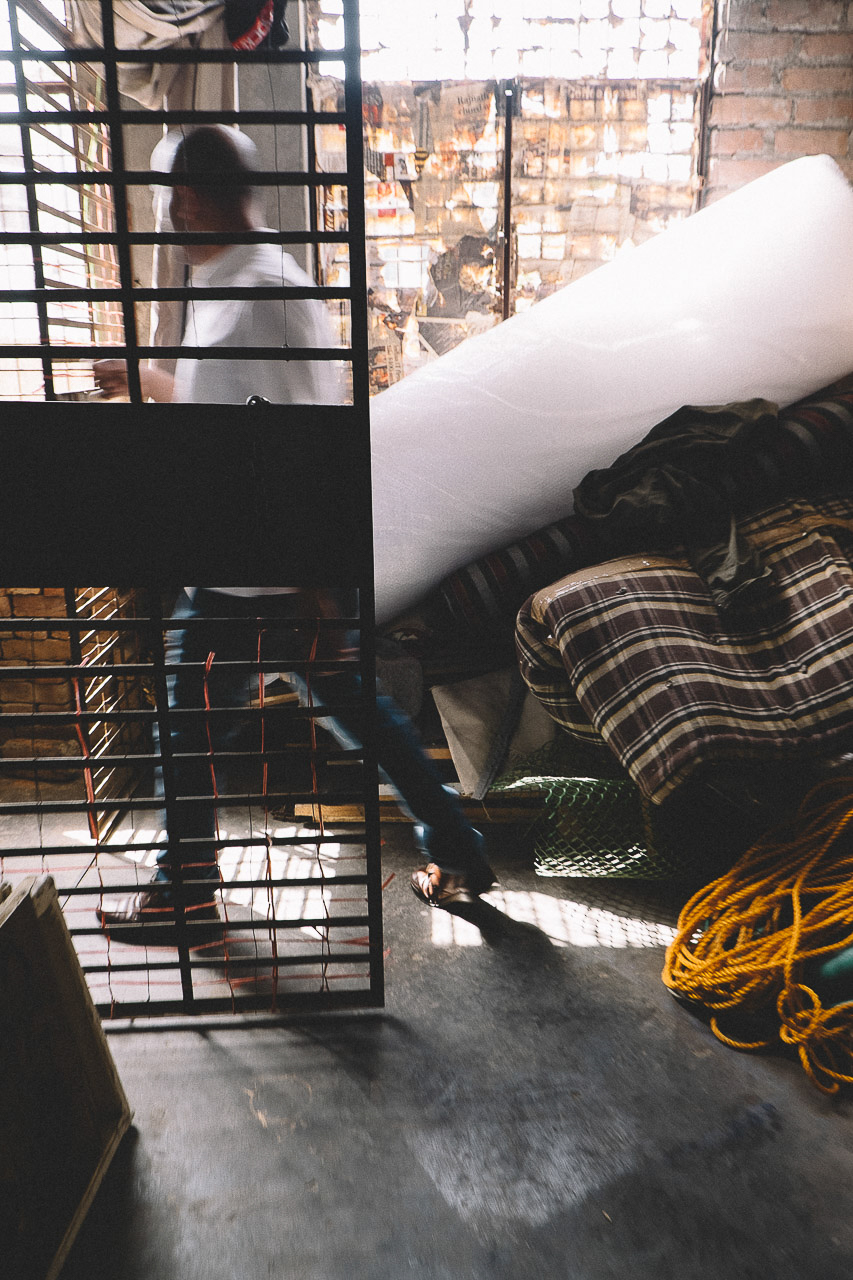
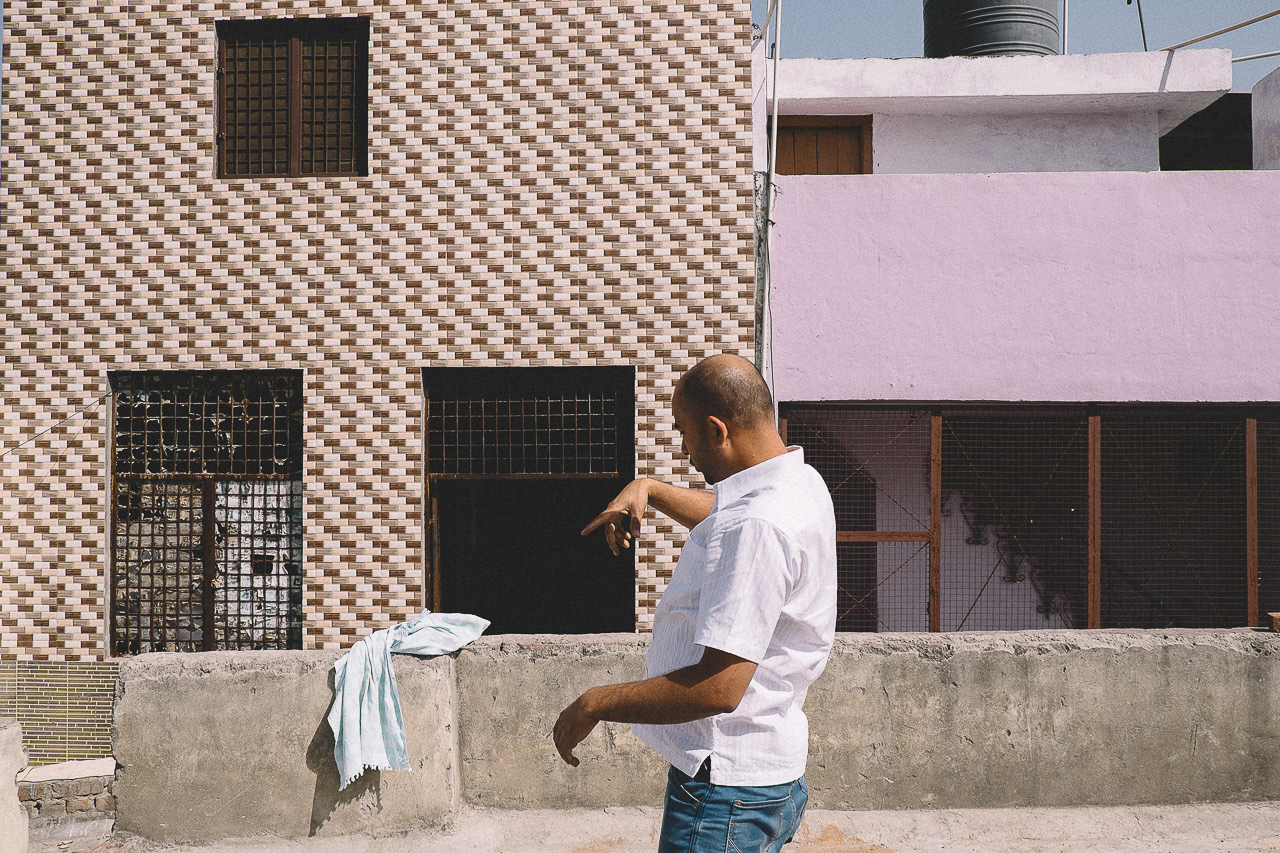
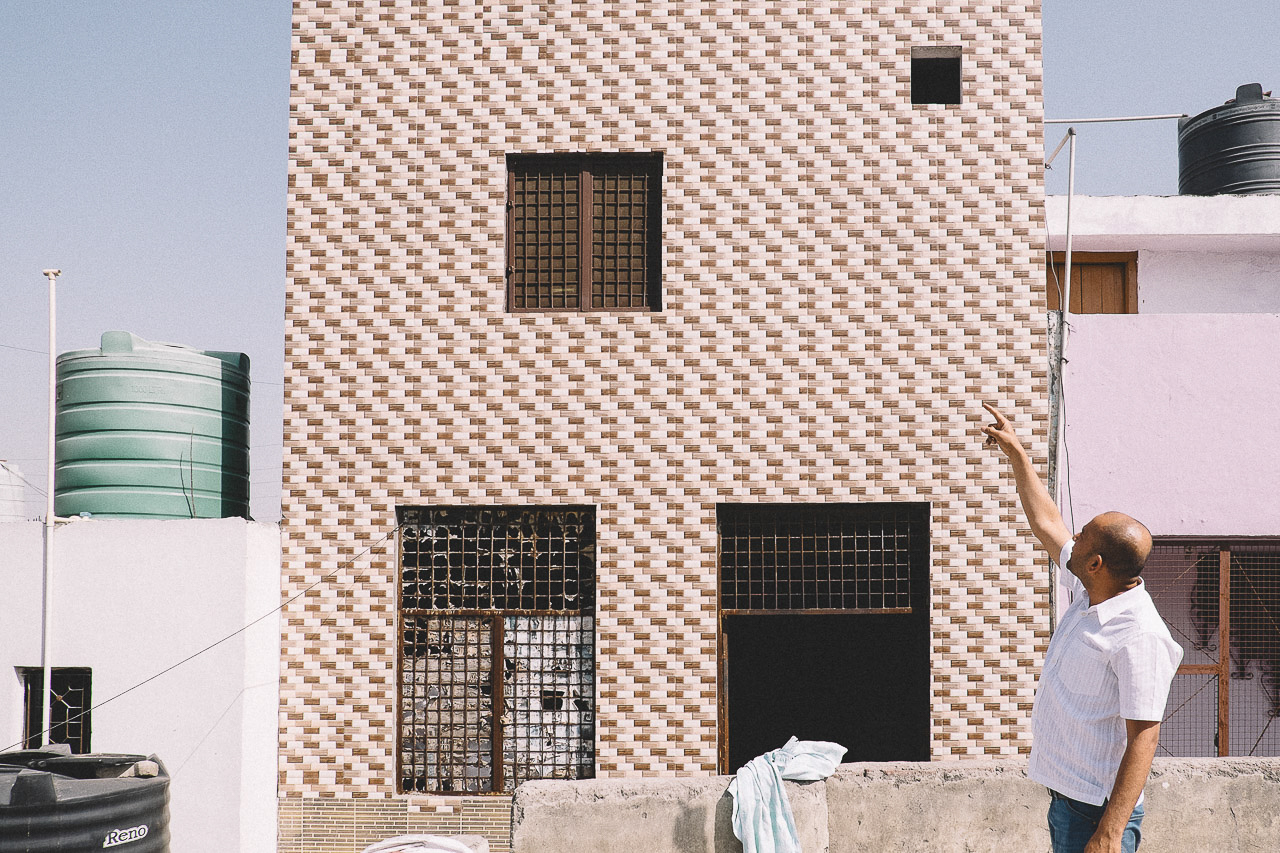
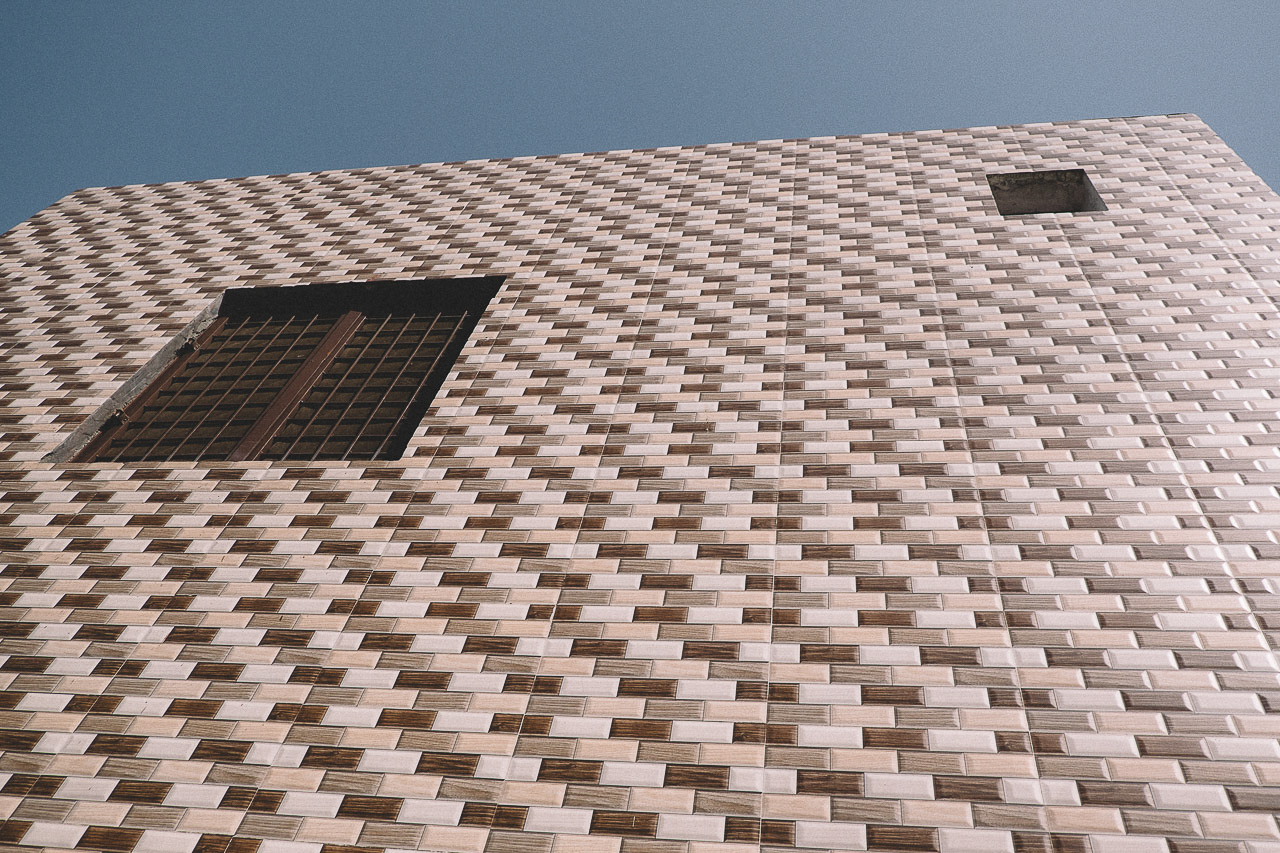
For him, it was an ordinary solution to an ordinary problem. For me, it said everything about those years. Every inch of space had been claimed. Every obstacle demanded an improvisation. Even drying a painting became an act of ingenuity.
I looked back at the studio one last time. It was chaotic. It was difficult. It was inconvenient.
It was also where an artist quietly built his future.